

Last Updated on February 18, 2026
Key Takeaway
- Dropshipping personalized products refers to an e-commerce business model where you sell customized items (engravings, designs, logos, etc.) without holding inventory.
- Profitable personalized dropshipping products include custom t-shirts, custom mugs, custom hoodies & sweatshirts, custom pet accessories, and more.
- Common dropshipping mistakes include choosing the wrong supplier, ignoring product quality, failing to offer clear customization options, overlooking local market considerations, and more.
Customers are no longer satisfied with generic items. They seek unique, custom products that reflect their self-expression, meet specific needs, and enhance personal connection. That’s why the dropshipping personalized products market has become a lucrative & profitable e-commerce business model in 2026.
But the question is: how to dropship personalized products? Three words: Choose Trending Products. In this article, we’ll go through a step-by-step guide that helps you to start selling & increase sales.
What are Personalized Dropshipping Products?
Dropship personalized products refers to the same retail business model “Dropshipping,” but the difference is selling custom products as per customers’ preferences rather than generic ones. Here, you only need to operate an online store offering personalization options, and the supplier needs to customize those and ship them to the end customer.
The popular method is to connect with print-on-demand services when offering personalized products. It’ll ease your inventory management, providing a hassle-free supply chain. Another method is to use the product customizer app for flexible customization.
Difference between dropshipping vs. personalized dropshipping
The key difference between regular dropshipping vs. Personalized dropshipping is as follows:
| Aspect | Regular Dropshipping | Personalized Dropshipping |
| Product type | Generic, mass-produced items (e.g., phone cases, hoodies, etc.) | Unique, custom-made items (e.g., phone case with initials/photo, hoodies with quotes, etc.) |
| Customization | Minimal or none; products are sold as the supplier’s stock | A high level of customization often offers a design tool on the e-commerce store |
| Branding | Limited; often, generic packaging is used | Strong branding opportunities, including custom designs, labels, and packaging inserts |
| Supplier model | Traditional dropshipping suppliers | Often relies on POD (print-on-demand) suppliers who specialize in on-demand production and customization |
| Competition | Very high; competitors often sell the same product, leading to price wars | Lower; the product is unique to your store, shifting the focus from price to value |
| Profit margins | Lower, due to vast market competition | Very high; customers willingly pay a premium for unique and personal items |
| Target market | Broad consumer base with general preferences | Niche markets and customers looking for unique gifts or self-expression items |
Can you dropship custom products to make money?
Yes, you can dropship custom products successfully to make money. In 2024, Research And Markets reported that the personalized gifts market is forecasted to grow $103.75 billion during 2024-2029 at a CAGR of 6.7%. Another study from the Forbes State of Customer Service and CX Survey found that 81% customers prefer companies that offer personalized experiences.
Don’t all these survey indicates a good sign, offering personalized product options to stand out in the saturated dropshipping market? Though there are many dropshippers, a few number sell custom goods. Other potential reasons are:
- Customized items attract premium or unique customer preferences, which often lead to higher AOV.
- Customers are willing to pay more for their personalized items that hold personal touch, sentimental, or exclusive value.
- Less competition & repeat customers’ purchase is a game-changer in a crowded dropshipping market.
- Satisfied customers & fewer/no product returns increase sales & revenues.
What Types of Personalized Products Can You Dropship?
Apparel & accessories, home decor & living products, pet supplies, baby products, stationery, gift items, and other top niches are profitable for custom dropshipping. Below, we’ve highlighted the 5 most demanding & high profit margin custom product dropshipping products, including market size & customization details:
1. Custom T-shirts
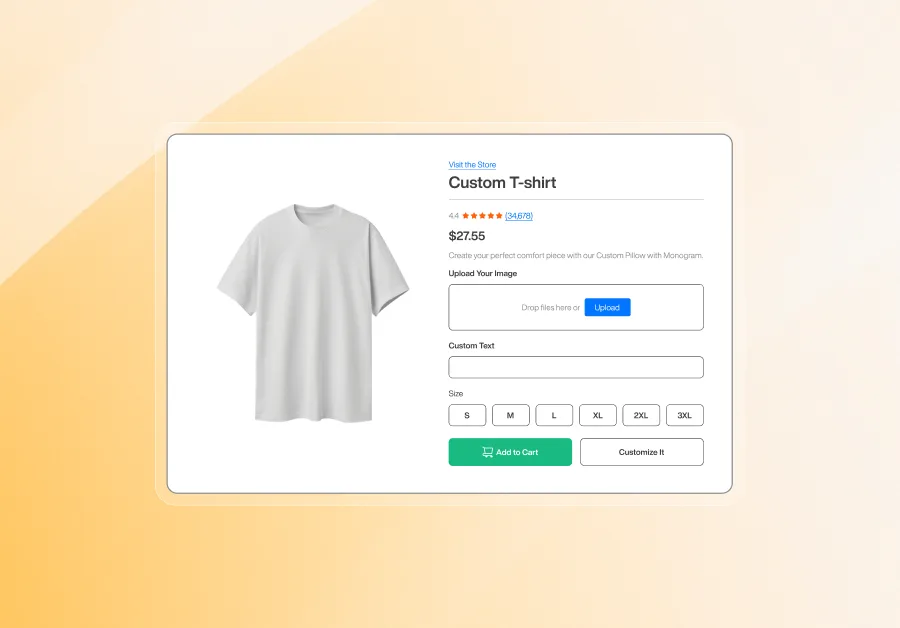
In 2025, IMARC Group stated that the global custom t-shirt printing market size was valued at $4.9 billion & estimated to reach $9 billion by 2033. Customization options offer businesses a competitive edge: low competition & high AOV. As an evergreen demand, a custom business strategy boosts customer loyalty, increases brand awareness, and generates word-of-mouth referrals.
Additional factors to maximize profits:
- Upsells & bundles
- Limited edition designs
- Niche targeting
- High-quality designs and so on.
2. Custom Mugs
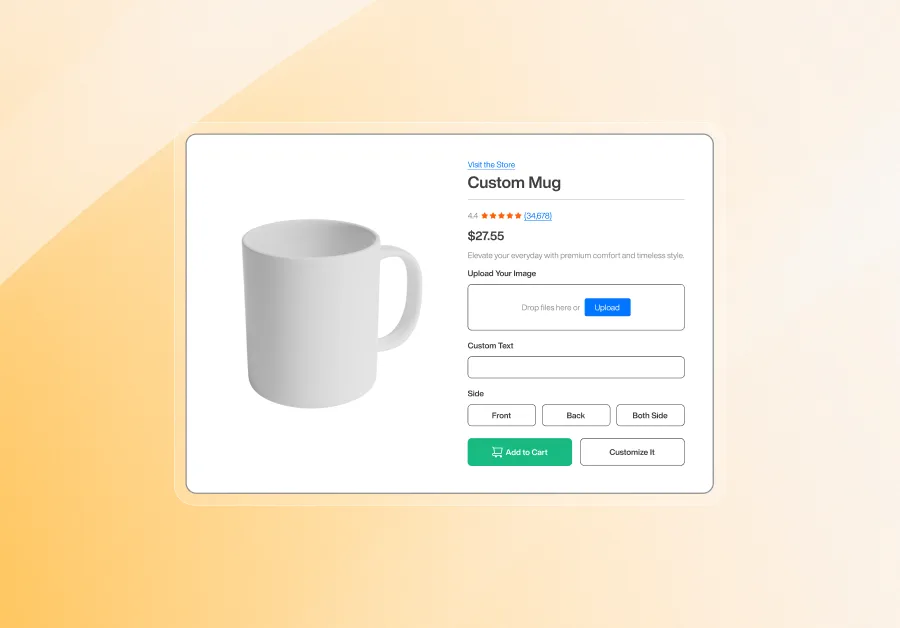
One study from Accio showcased that the global custom-printed mug market is expected to reach $5.4 billion by 2025. The market research clearly shows that the demand for custom mugs is increasing due to their versatile customization options, lightweight & easy to ship.
Additional factors to maximize profits:
- Offer premium customization options
- Utilize multi-level personalization
- Gift bundle products (mugs + theme sets, drinkware, mugs + custom cookies, etc.)
- Invest in high-quality product images
3. Custom Hoodies & Sweatshirts
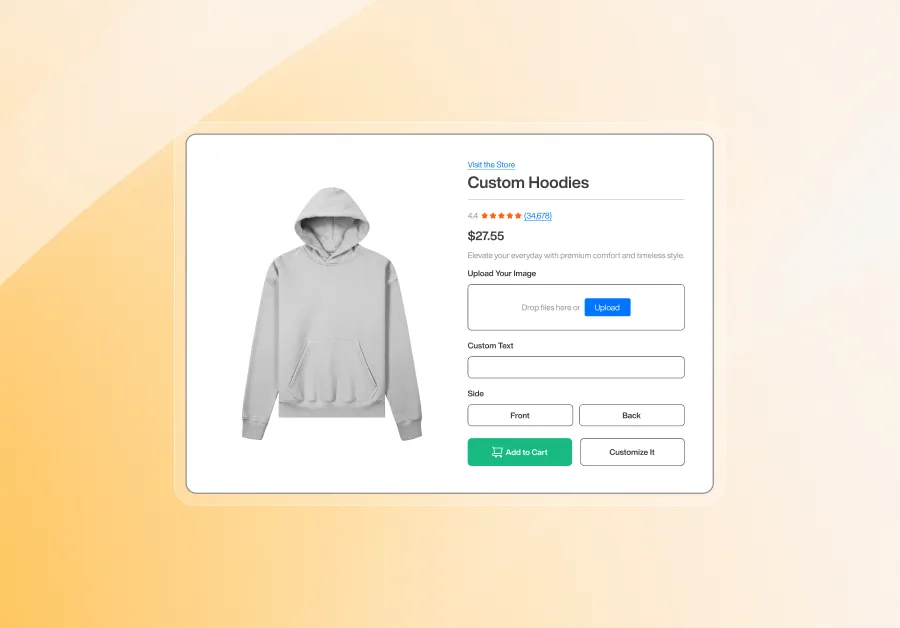
Custom hoodies & sweatshirts are another profitable product to dropship due to high, year-round demand, low operating costs, and the ability to command higher prices through premium personalization options. As the report from the Grand View Research stated that the global sweatshirts and hoodies custom printing size was valued at $3519.1 million in 2024.
Additional factors to maximize profits:
- Offer multi-level customization (front, back, sleeves, hood, etc.)
- Pair hoodies with mugs, hats, or other gift bundles
- Offer limited-time discounts to increase AOV
- Premium materials & limited editions
- Leverage email & retargeting
4. Custom Pet Accessories
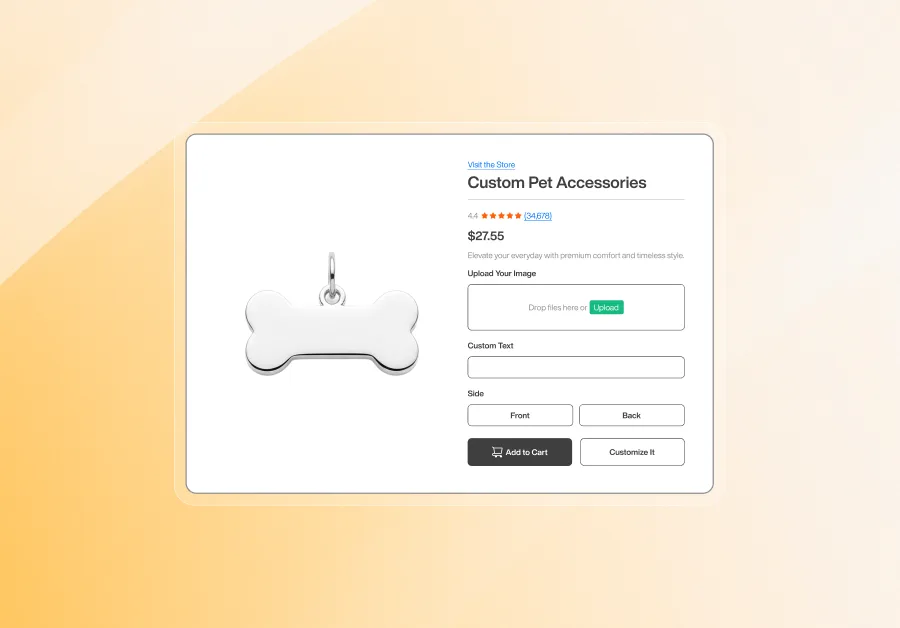
The custom pet accessories are highly demanded dropship products (e.g., personalized bowls, stylish collars, leashes, tags, and others) due to the booming pet market. The pet industry is huge and growing, with owners treating pets like family and spending significantly on them.
Additional factors to maximize profits:
- Offer multi-level personalization
- Leverage seasonal & holiday campaigns
- Use high-quality visuals & lifestyle images
- Offer premium customization options
5. Custom Bracelets & Pendants
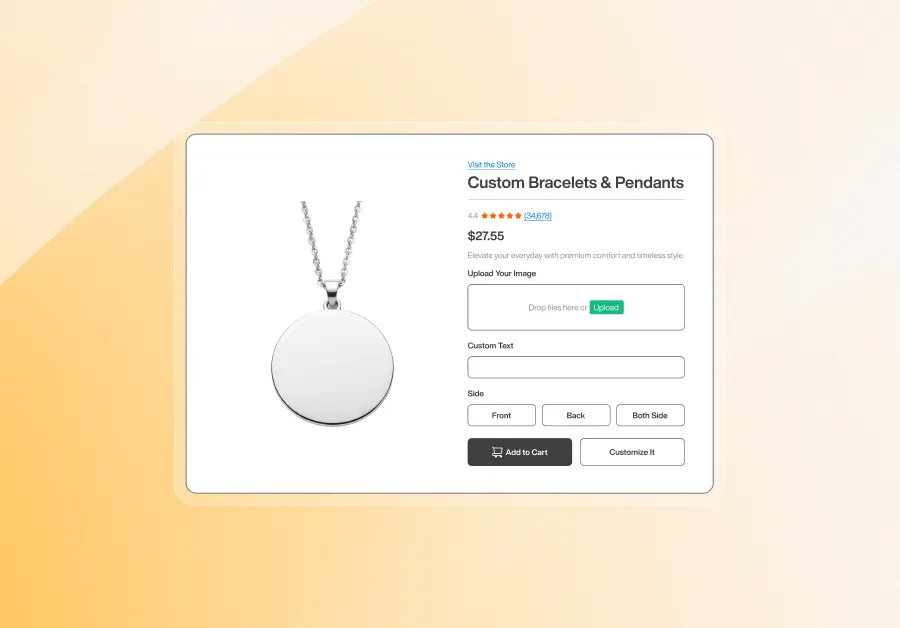
There is a growing consumer desire to express individuality and own unique items, where custom bracelets & pendants are the best. Generic dropshipping items may have margins of around 15-20%, whereas personalized jewelry often achieves 30-75% margins, providing a return on investment.
Additional factors to maximize profits:
- Offer gift packaging, engraving upgrades, or additional charms
- Pair bracelets with pendants or other accessories for increased average order value
- Leverage seasonal campaigns
- Emotional appeal drives higher conversions
How to Dropship Personalized Products? (4 Steps)
Dropshipping personalized products follows the same tactics as traditional dropshipping, but with a creative business strategy: customization. Below, we’ve shared a clear scenario explaining how it works:
Step 1: Custom product setup & personalization design
Before any order happens, the personalization flow must be prepared. Here, what the merchant does:
- Choose a base product
- Defines personalization options:
- Text (name, date, message)
- Image uploads (photos, logos)
- Option selections (size, color, material)
- Multi-level or conditional logic (e.g., engraving only if “Yes” is selected)
- Sets pricing rules (base price + personalization upsells)
- Connects the product to a customizer app (e.g., live preview)
This is a must-have for a clear setup, ensuring customers don’t get confused and preventing incorrect orders later.
Step 2: Customers customize products with real-time live preview
This is where personalized dropshipping differs most from standard dropshipping. The customer visits the product page to –
- Selects personalization options
- Enters text or uploads images
- Sees a real-time preview of the customized product
- Confirms personalization
- Check out pricing, and
- Add to cart
For this real-life customization & dynamic pricing, you should integrate your store with the customizer app.
Step 3: Order placement to POD suppliers
Customers complete the checkout process when they’re satisfied with their personalization. The order includes all customization details:
- Text inputs
- Images
- Selected options
- Selected print-ready files
When you’ve all the details, it’s time to send files to POD suppliers. Also, the customer receives an order confirmation notification.
Note: Personalized orders cannot be “fixed later.” Accurate data capture prevents costly reprints.
Step 4: Supplier produces & ships the product
Supplier performs basic quality checks, prints, engraves, or assembles the personalized item, and ships the product directly to the customer’s doorstep.
Note: It’s a dropshipping business policy: you don’t hold inventory or handle shipping.
As you noticed, the key difference from standard dropshipping is the customization options, which ensure orders are accurate, scalable, and error-free.
Setting Up Personalized Products Using InkyBay on Your Store
You can set up personalization on your Shopify store through the product customizer app, InkyBay & POD collaboration. Below, we’ve shared a step-by-step guide:
Step 1: Install & set up InkyBay on your store
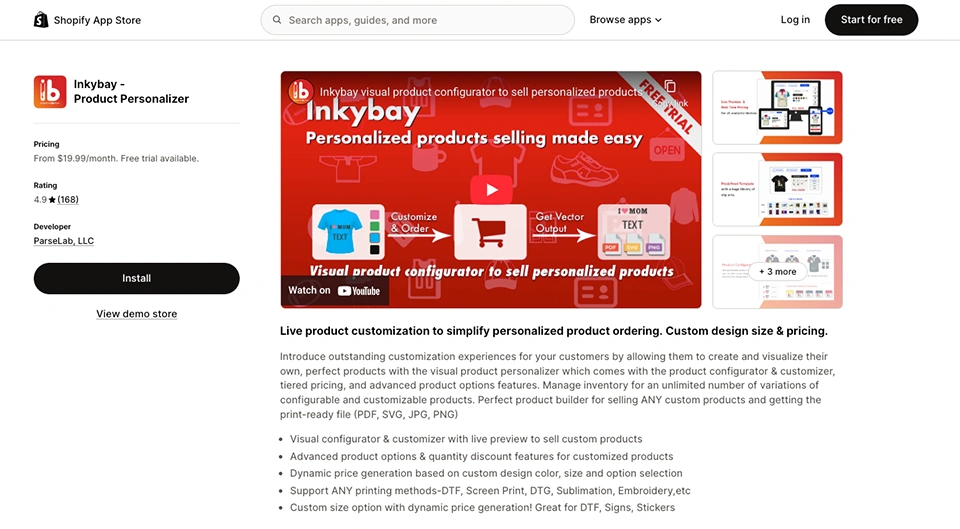
Go to the Shopify App Store and search for InkyBay. Install the app and follow the instructions to embed it in your store. [Reminder: The app is integrated with all Shopify themes.] When the installation is complete, you’ll see the InkyBay Dashboard in your Shopify admin panel. For more details, click the Installation link.
Step 2: Add products to your Shopify store
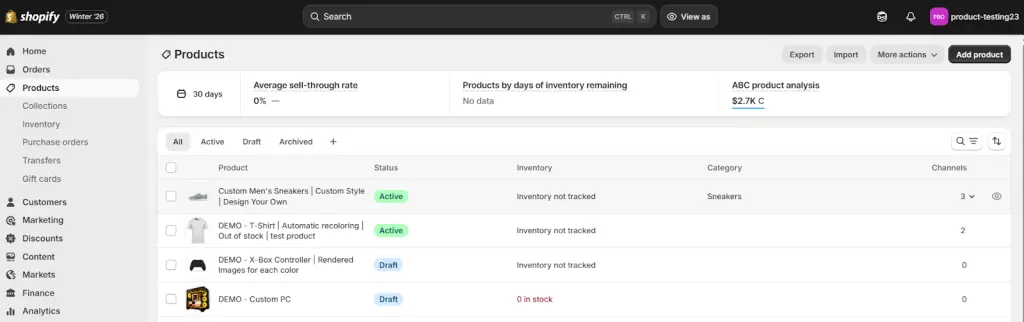
In your Shopify store dashboard, select “Products” from the left sidebar & click “Add product” options. Here, you can add basic product details, like title, description, price, and images. Now, save the product.
Step 3: Select a product to make it customizable
Click the InkyBay app to access its dashboard. After that, go to the “Products” option from the top bar & select the “Create Custom Product.” Here, you’ll see all your store’s available products. Or, find your specific products using the “Filter” option (e.g., collection, tag, vendor, type, or search).
Step 4: Add custom options using InkyBay.
Now, select the specific products and click the “Make it Customizable” button. Here, you can set
- Product size/offering type: You can edit or create a new set that matches your products. For example, custom mugs (e.g., young size, child size, or adult size).
- Different print types: With InkyBay, you can edit or add a new printing type (e.g., DTG, Screen Print, Flex Print, Premium Vinyl, or others) with pricing.
- Quantity Discount/tiered pricing: You can add or edit quantity discounts to increase AOV.
- Set available product colors or create a new product color set.
- Configure product parts/layers: Define the specific product areas (e.g., front, back, sleeves, etc.) where customers can add designs using “parts” or “layers”.
- Manage colors: Set available product colors & styles, linking them to specific printable images or color sets.
- Configure pricing: Set up customization fees, pricing per character, per color, by size, or based on design area (e.g., price per square inch).
- Manage inventory: Use advanced settings to control inventory for specific product variations (e.g., size, color, style combinations) if required.
Also, your customer can add a note before clicking the “Add to Cart” button. To explore in detail, watch this video: how to make a product customizable.
Step 5: Preview & test the customization flow.
Before going live, visit your product page, click the “Customize It” button that you added through InkyBay. Now, test all customization options you’ve added, like image upload, live preview, price changes, etc.
Step 6: Integrate with POD Supplier.
You can integrate your online store with a POD supplier to automate custom order fulfillment. Using InkyBay, you get high-resolution personalization files that you can send to the POD supplier for further production and delivery.
But if you plan to only collaborate with POD, there are some limitations you might face:
- Limited product customization options
- Limited or no live preview accuracy
- Complex personalization becomes messy
- Limited pricing rules
- Manual fixes as catalog grows
- May not handle premium personalization
However, POD platforms are great for basic personalization, but not for managing advanced & complex personalization. But collaborating with both InkyBay & POD suppliers, you can scale your custom product business effectively.
How to choose the Right Supplier or Print-on-Demand Partner?
To choose the right supplier or POD partner, you should consider five key factors, including:
- Product quality & range: The products your supplier provides reflect your brand reputation & quality. So, to verify product quality, check out order samples, product catalog, and customization options that they offer.
- Cost structure & profit margins: Look beyond the base price to understand the total cost of operations, including: Transparent pricing, calculating margins, and volume discounts.
- Fulfillment & shipping: Efficient logistics are critical for customer satisfaction. So, you must consider average production and shipping times by prioritizing POD suppliers near your target market to reduce costs & speed up delivery.
- Technical integration & support: Ensure the supplier integrates with your e-commerce platform for automated processes. Check out customer service for responsiveness and their policies on returns.
- Reputation & stability: Research reviews & testimonials from other sellers before selecting a POD partner.
However, our custom dropshippers suggest the top three POD companies or partners by considering all these key factors. Scroll down to the next section now!
3 Best Print on Demand Companies for Dropshipping
The 3 best POD (print-on-demand) companies for dropshipping in 2026 are as follows:
Printful: Best global POD service
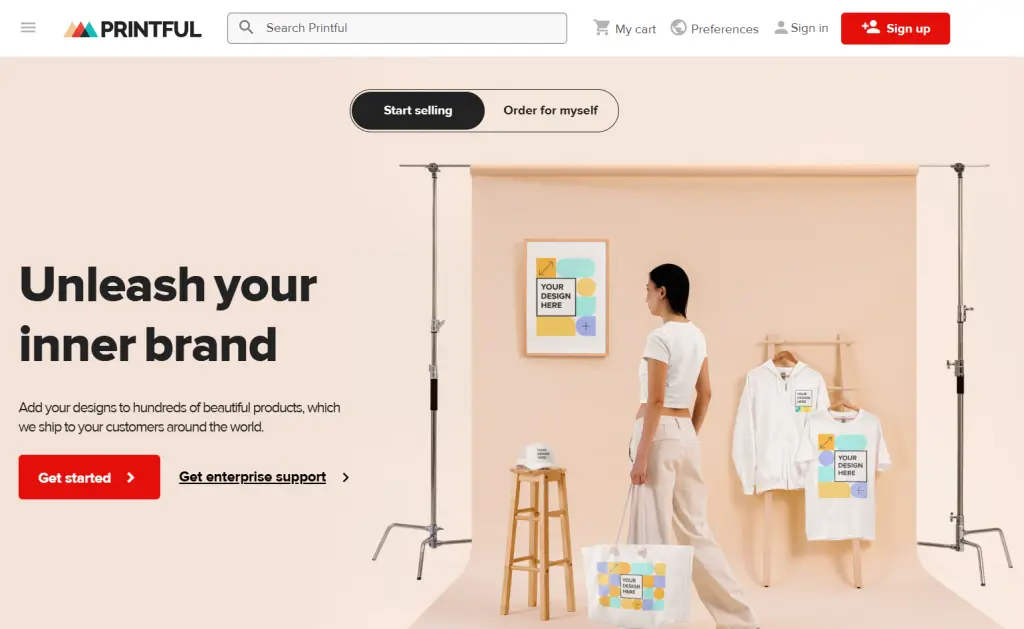
Whether you want to sell clothing, prints, home decor, accessories, or other items, Printful is a powerful POD service provider with a wide range of products. All you need to submit your designs using the built-in editor. Printful handles all production and fulfillment tasks, including printing, packaging, and shipping orders.
Printify: Best POD supplier network
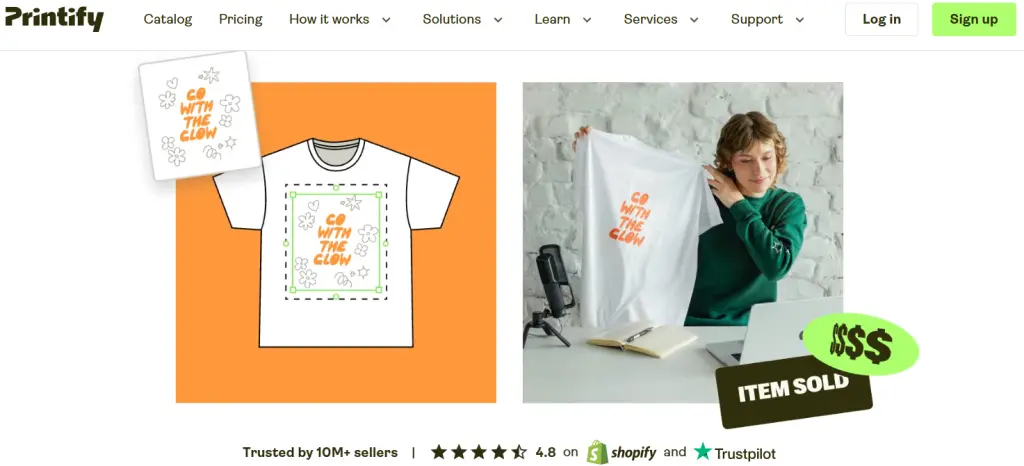
Printify has the largest selection of customizable products; it offers a huge library of items by connecting users with a global network of printing partners. Extensive supplier network for diverse printing options, flexible shipping costs, and production timelines based on provider. Most Shopify merchants prefer to use Printify’s transparent pricing and real-time shipping updates.
Gelato: Best for custom stationery
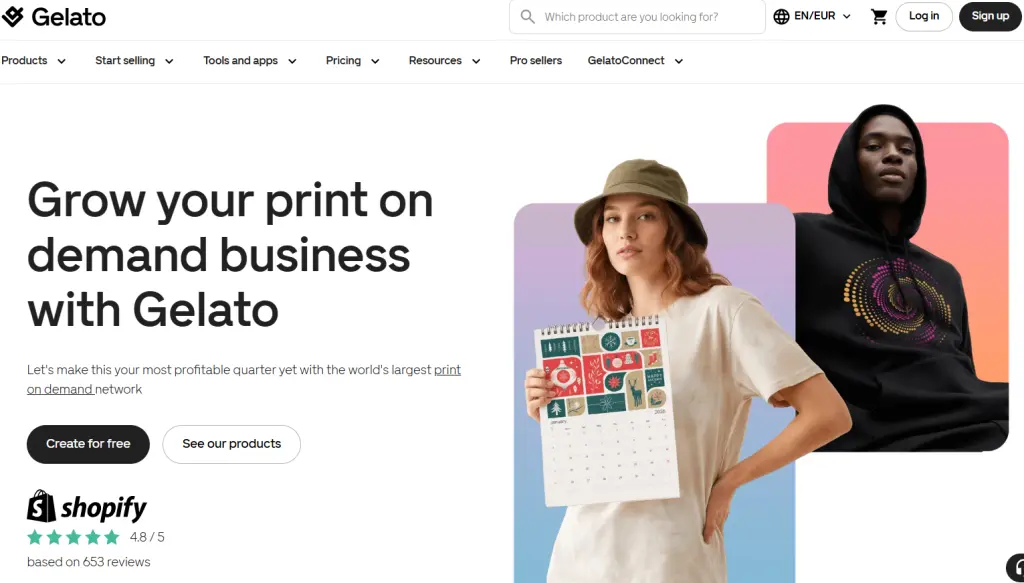
Gelato is your go-to POD & fulfillment platform that lets merchants sell custom products without holding inventory. This platform focuses on local production and shipping, which can reduce delivery times and shipping costs worldwide. This site uses an algorithm to pick the best print provider based on your customer’s persona.
However, there are other popular POD companies, such as Gooten (best for custom homeware), Spreadconnect (best for fast fulfillment), Teelaunch (best for unique products), ShineOn (best for custom jewelry), JetPrint (best for custom watches), and so on.
Can I Dropship Custom Products without POD Suppliers?
Yes, you can dropship custom products without partnering with POD suppliers. To find trusted manufacturers, consider using platforms like Alibaba, which offer private labeling or white labeling, allow for upfront minimums, and then fulfill orders.
Other key factors you should follow are as follows:
- Partner with custom manufacturers (Non-POD): Instead of POD platforms, you can work directly with custom product manufacturers or workshops. For example, local print shops (for DTG, UV, laser engraving, etc.), apparel factories offering custom services, jewelry or gift manufacturers, and so on.
- Use a product customizer: You might not want any POD automation, so you must capture personalization data accurately. For this, you should use a feature-rich and user-friendly product customizer app to act as the bridge between customers and manufacturers.
- Pricing strategy: As you know, POD platforms add fees; non-POD dropshipping gives you more margin. Some typical cost structures are: base product cost, customization cost, packaging, shipping, and so on.
- Quality control & error prevention: This model requires process discipline. Some must-have factors you should follow to ensure quality control: auto-approve mockups before order submission, character limits & font previews, image DPI checks, etc.
What are Custom Product Dropshipping mistakes you should avoid?
The seven common custom product dropshipping mistakes are as follows:
Choosing the wrong supplier
When you work with the wrong supplier (not niche-specific ones), it leads to business failure. The supplier works as your business partner, handling core operations of your custom product creation, inventory, and shipping. If you face issues with them, it directly impacts your brand’s reputation and customer satisfaction.
| Tips to avoid mistakes: 1. Order samples before listing them. 2. Check reviews & reputation through merchants’ feedback. 3. Verify the customization process to ensure they can handle text, images, and colors correctly. 4. Assess production capacity to ensure they can scale with your sales. 5. Maintain communication to ensure they respond to your queries and issues instantly. |
Ignoring product quality
Focusing only on profit margins without checking product quality can cost high or even result in lost sales. Custom products are often higher-priced; customers expect perfection & unmatched quality. When quality fails, you lead to: refunds, negative reviews, lost trust, & revenue loss.
| Tips to avoid mistakes: 1. Focus on supplier reliability 2. Clear communication 3. Efficient operations and Strong customer experience |
Not offering clear customization options
In a custom dropshipping business, you’re selling customers’ experience & uniqueness, not a product. If the customization process is unclear, customers feel uncertain, make mistakes, or abandon the purchase entirely. Another fact is that customers can’t preview the final result, which makes them puzzled too.
| Tips to avoid mistakes: 1. Use structured customization fields 2. Provide Live Preview or help docs 3. Allow customers to share notes when customizing 4. Add a confirmation step before checkout |
Skipping legal considerations
When you plan to offer custom product dropshipping, you must maintain key legal considerations involved:
- Business & Tax foundations (licenses & permits, taxes, etc.)
- Intellectual property (IP) compliance (such as design ownership, platform rules, etc.) & product legality
- Consumer protection laws & transparency (such as product descriptions, images, and marketing claims)
- Tax obligations
- Supplier agreements & data protection
However, you’re responsible for ensuring your suppliers provide authentic, safe, and legally compliant products. Customers can upload any images, logos, and other graphics, but you should verify that these are copyright-free. Otherwise, your store might shut down or get a penalty, payment holds & legal notices.
| Tips to avoid mistakes: 1. Use original or licensed designs only 2. Avoid trademarked names & logos 3. Add customer-upload disclaims 4. Manually review custom orders |
Ignoring pricing strategy
In custom product dropshipping, ignoring a strategic pricing strategy can lead to unsustainable profit margins, loss of customers to competitors, a damaged brand image, and potential business failure. The most common mistakes merchants make in a custom product pricing strategy are:
- Not calculating all expenses when setting prices (supplier’s base product & shipping costs, transaction fees, platform commissions, return processing costs, etc.)
- Pricing too low or too high without a clear, justified value proposition
- Blindly matching competitors to set pricing
- Using a one-size-fits-all price or a static markup across all products
- Over-discounting impacts profit margins
- Ignoring perceived value
| Tips to avoid mistakes: 1. Use value-based pricing 2. Separate customization fees 3. Offer tiered customization 4. Test different price points & adjust gradually |
Neglecting returns & refund policies
Neglecting clear return and refund policies in custom product dropshipping can lead to severe damage to your brand’s reputation, lead to negative reviews, significant financial losses, and legal issues. Rather than a generic product, custom product dropshipping is more challenging due to its demands and uniqueness. Common mistakes merchants make include misaligned supplier policies, poor communication of exclusions, slow or poorly handled processes, and more.
| Tips to avoid mistakes: 1. Create a custom return policy 2. Set clear expectations on product pages 3. Use design preview & confirmation steps 4. Align policy with your POD supplier 5. Offer partial refunds or replacements |
Ignoring customer feedback
When you ignore customer feedback, it leads to significant negative impacts, including high customer complaints, missed improvement opportunities, a negative brand reputation, and lost sales. As you know, custom products are emotional and expectation-driven, which requires exact results as customers order.
| Tips to avoid mistakes: 1. Collect customer feedback through post-purchase email surveys, review requests after delivery, and so on. 2. Categorize feedback for better results (e.g., customization issues, design accuracy, quality, etc.) 3. Count & work on that feedback to make your strong one 4. Turn feedback into social proof |
Final Verdict
Now, you’ve key resources, custom product selling tips, and trending products statistics, it’s time to sell your dropshipping personalized products. Compared to the traditional dropshipping business model, custom ones are more profitable and offer lower rates.
So, before starting, think of how you can make your product stand out & convince shoppers to repeat their purchase. It’ll be beautiful artwork of your customers’ pets or text-based designs. It’s important to find the right angle for your target audience’s demands.
FAQ’s: Dropship Personalized Products
What is the best web-to-print product personalizer app?
InkyBay is a powerful and best web-to-print product personalizer app with a device-friendly design lab & excellent support. The best part is its intuitive live preview, dynamic pricing, broad product customization, and works with different Shopify themes.
How do I dropship my own product?
To dropship your own product, first pick a niche and a reliable supplier, build an online store, list your products with great photos, and then drive traffic with marketing to fulfill orders.
What is the most profitable product to dropship?
The most profitable products to dropship include clothing and fashion accessories, baby products, office supplies, personal care, beauty products, and so on.
Which niche is most profitable in dropshipping?
The most profitable dropshipping niches include pet supplies, health & wellness, home goods, tech gadgets, and others, driven by high margins.
Can I dropship with $0?
Yes, you can start dropshipping with $0 by leveraging free trials (like Shopify’s for a store) and using free traffic marketing.
Why sell personalized products via dropshipping?
Selling personalized products via dropshipping is not only profitable but also increases customer loyalty. Other marketing benefits include high demand & niche appeal, low risk & costs, flexible, and scalable
What are the best platforms for dropshipping custom items?
The best platforms for dropshipping custom items include Shopify (for building a store), Printify & Printful (for POD providers), and InkyBay (best product customizer app).
How to market personalized dropshipping products effectively?
Focus on visual platforms (Instagram, Pinterest, TikTok, etc.), showing customization, build trust with reviews, use target ads for specific audiences, and others to market personalized dropshipping products effectively.
What are the common challenges in dropshipping personalized goods?
The most common dropshipping personalized challenges include: longer processing times, complex order management, quality control issues, returns & refunds, finding reliable suppliers, and so on.