

Key Takeaways
- Product customization is a must-have in 2026—it’s one of the fastest ways to grow your online business and stand out in competitive markets.
- Customized products allow customers to design their own versions on plain or base products, creating a more personal and engaging buying experience.
- Selling customized products is both easy and profitable. It helps you attract loyal customers, boost average order value, and offer products that align with current trends.
- With the right tools, you can fully leverage powerful Shopify apps to automate customization, pricing, and order processing.
- A step-by-step guide can help you get started quickly and sell more efficiently using InkyBay.
Selling customized products on Shopify feels like the perfect business; higher margins, loyal customers, and products no one can compare with. But if you don’t know the basics of selling on Shopify amid all the trend changes, your business might crumble in no time!
I still remember the time when simple name engraving on products felt like premium. But today it’s different; customers don’t just wish for customization, they expect it in your store, they want flawless execution of their thoughts, and personalization that matches them.
The idea of customization has shifted from a nice-to-have to a must-have, and you need to embrace it as soon as possible. But don’t jump in blindly. Get your basics right with a guide like this. This is not just theory; this guide is an offering of experience gained over the years. Get your basics right with experts who have seen the market shift from zero to six figures.
What Are Customized Products?
Customized products are items that are made to meet customers’ expectations and designed by customers. Customers can change a plain product according to their preferences, including color, text, images, and printing on the desired section of the product.
If you want to get into the product customization business in 2026, you would have to stop thinking of customization as a feature and more as a must-have production model. To understand customized products even better, look for these three characteristics:
- Customized products have direct input from customers, and it affects the final product.
- The product is made only after an order is finalized.
- The value of customized products is based on relevance, not on mass availability.
Why is it worth selling customized products on Shopify?
Customized products give you the competitive advantage you need to grow your business. With customized products, you meet customer expectations, stand out on every trend change, and stay ahead of all competitors. Here’s more reason for selling customized products on Shopify:
- Customization meets modern customer expectations. Customers nowadays don’t just want plain products; they want something different, something that feels uniquely theirs. A huge chunk of online shoppers expect personalization from the brand, and it leads to severe dissatisfaction if they do not get such experiences. By selling customized products on Shopify, you are matching the vibe customers are looking for. You are not just selling features; you will be selling experience with personalized products. If you are still contemplating selling customized products, it just means you are giving customers to your competitors. While selling customized products, you might feel at a loss on deciding where to start your custom business journey and which products you should choose. But with a quick market analysis and your customer preference, that issue can be resolved.
- Drive higher sales and revenue with customized products. Offering personalized products in your store means an improved customer experience, which directly translates into a higher profit margin. Studies revealed that ecommerce personalization strategies can increase sales by 20% on average. Customized products can inherently attract customers and make them feel they own the product even before purchasing. This is why they feel less stressed to order a customized product.
- Get loyal customers through customized products. Selling personalized products in your store dramatically increases your store’s retention rate. Once you start offering a personalized experience to customers, they come back again and again for it. With the emotional attachment created during the process, customers are less likely to forget your brand. Another aspect of customized products is that customers love to brag about their creations everywhere, which brings new customers through word-of-mouth. So you are less likely to spend much on getting new customers for your store.
- Shopify has vast customization tools and apps. One question keeps coming up: why is Shopify the best place to sell customized products? The answer is simple: Shopify has a wide range of apps that make selling your custom products easier. Those apps can provide a live preview, modern elements, complex customization tools, and an automated order process. Some apps go even further by providing a dedicated design lab to help transform your store. This intrigues customers and helps you live up to their expectations.
This is why you should start selling customized products on Shopify and give your business a new direction.
How to Create & Sell Customizable Products in Shopify in 2026?
Selling customized products on Shopify might sound daunting, but it’s actually easy. You’ve got to decide the market beforehand, understand your customers’ needs and preferences, and pick the right tool to help you with the process. Now here’s a step-by-step guide on creating and selling customizable products in Shopify:
Step 1: Analyze the Market and Understand Customer Preferences
Before you risk investing valuable time and energy in a new product, you need to determine whether it is really worth the effort. This is one of the biggest mistakes I have seen e-commerce owners make.
Analyzing the market would give you an insight into what’s trending and which customized products customers are loving. This way, you would have the perfect strategy for bringing new customized products into your store. How to analyze the market to get a proper idea?
- Research your niche products. Understand trends, scalability, and maturity of your niche.
- Competitor analysis. Understand how saturated the market is, and the strengths and weaknesses of your competitors. Getting a sense of all the aspects would ensure you can utilize them all.
- Find out the market gap. See what your competitors are missing and how you can fulfill those pieces.
Then you must understand what your customers prefer. If you are already running an online business on Shopify, you already have an audience base who know about your products. Understand their taste and preferences. Review your best-selling items and consider incorporating customization into them. You can also utilize your customers’ opinions by asking them on social media. This way, you are not blindly jumping into a market that does not have any real impact.
Step 2: Choose the Products for Customization
Not every product in your store needs to be customized. You need to have a strategic plan for which products are customizable and which are not. As you have already done the market analysis and understand your customers’ preferences, include those products for customization. This way, you will have a set vision and niche of product sets, helping you in the custom product market.
Step 3: Add Products to Your Shopify App
Now add the products you want to publish as customized products. For that, head on to your Shopify store dashboard > go to the Products page > click on Add Products.
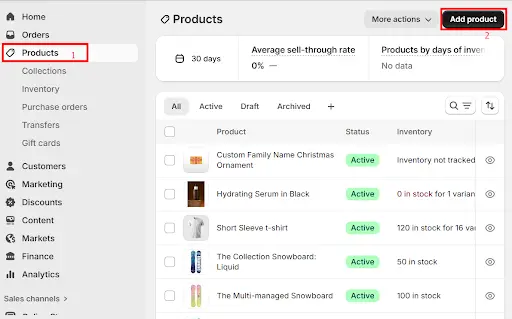
After that, add all product details.
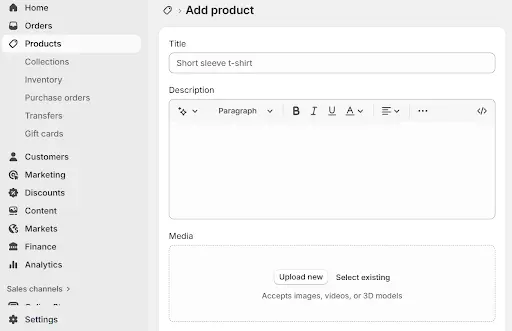
By adding a different product variant option, you can customize the products. However, if you want to customize an existing product, follow the next step.
Step 4: Get Your Product Customizer
Although Shopify offers some customization features, I would highly recommend adding a product customizer or a product personalizer. A good product personalization app would offer extensive features that would be perfect for meeting every need of your customers.
Among all product personalizers on the market, I would strongly recommend Inkybay. With Inkybay, you can easily customize your existing products.
Install InkyBaay from your dashboard. Go to the Apps section from your dashboard > Apps > search for InkyBay-product personalizer > hit Install. To learn more about the installation, follow this guide.
Now with InkyBay, you can customize any of your existing products. Simply head over to the InkyBay dashboard > Go to the products section > see which product you want to customize > click on the ‘make it customizable’ button > add options > hit save and publish.
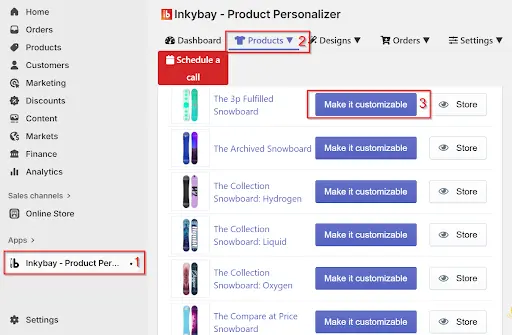
Making any of your products customizable is that simple with InkyBay.
Step 5: Add Customization Options
With InkyBay, you can add tons of customization options to your products. So you can cater to all your customers’ interests. You would not have to hold back, thinking it might be overwhelming. InkyBay provides you with a print-ready file for printing and fulfilling the order. You would not have to check all the product customization requirements manually.
With InkyBay, you can let customers add text, image, change color, clipart, pre-made templates, and enable many more advanced features.
Step 6: Streamline Order and Fulfillment
Now that you are all done with adding customization options to your products, you need to focus on order fulfillment. As I said earlier, InkyBay provides print-ready files to ensure order fulfillment goes easily. Later, you can use the print-ready file to make the product yourself if you have inventory, or dropship the order to a fulfillment partner. This is a very crucial step in your whole customized product-selling business. Once trust is lost, it cannot be recovered.
Make sure your delivery dates are shown on the store, and that you are delivering products that match what the customers have designed. Use InkyBays’ notes option to take additional notes and fulfill customers’ vision. And to ensure your customers are confident about the delivery time. To do that, you can add an estimated delivery date to their dashboard. This would reduce any anxiety and uncertainty your customers might feel, and you can deliver on that exact date.
How to Market Your Customized Products
To sell customized products on Shopify, you need to market them right. Without marketing, your customers would not even know about your existence. However, custom products are comparatively easy to market because of their unique presence. Here are a few tips to market your customized products;
☑️ Promote the experience, not the product. Custom product buyers love the journey and the feel of making something their own. You need to make this feeling your primary marketing strategy and use it as much as possible. When you showcase to customers how fun it is to make a custom product, they will be intrigued to have one of their own. Here are a few ways you can promote the experience:
- Showcase the process of making a custom piece.
- Promote in a way that ensures their design cannot be replicated by anyone else.
- Promote the uniqueness of a custom piece.
- You can also share informative posts on different social media platforms to make a real impact.
☑️ Include customers in the marketing process and the launch of new products. Customers love to be included with their favourite brands. When marketing your new custom products, take the opinions of your customer base into account. Ask them which new products they would love to customize or which clipart they would like for upcoming events. For that:
- Communicate with your customers efficiently.
- Send out newsletter with response box.
- Give customers the freedom to request any product customization.
☑️ Utilize all your social media platforms efficiently. Social media is the biggest platform for attracting customers to your offering. With social media, you can attract customers, keep them engaged and hooked on the custom offering, and understand their unique interests to include them in your store. With this move, your products would be part of customers’ daily scrolling, staying on their minds constantly.
You can also run ads with attractive copy, which would help you market your customized products even more efficiently.
☑️ Collaborate with influencers. When you are about to launch a new customized product or add customization to your store, it would be great to collaborate with influencers. They already have an audience base who love such products, so it would be easy for you to promote and grab potential customers. To choose the right influencer:
- See who is working on your niche.
- Pick out influencers who truly connect with the audience and whom the audience loves.
- Keep the budget in mind while choosing the right influencer.
Common Mistakes New Sellers Make With Custom Products on Shopify
Selling customized products can bring you high profit, but only when you avoid these common mistakes:
- Treating custom products as an add-on, not as a core function. One of the biggest mistakes sellers make is thinking customization is just a feature. But in reality, customization can change everything, from your product page to customer support. Customized products cannot be treated with bulk inventory logic. It required order-specific workflows. You need to have tighter communication and error control. When customization is treated, errors increase, and fulfillment slows down.
- Offering too many customization options in one product. More options don’t always mean better conversion. It can sometimes overwhelm customers and make the overall product appear busy! It also leads to decision fatigue among customers, poor-quality designs that customers may later regret, and higher refund and revision requests. Evidence also suggests that structured choices convert better than unlimited freedom.
- Ignoring the real-time accuracy. Customers expect to see exactly what they are designing. If your store ignores the visualization aspect, trust drops instantly. Common issues related to these include static mockups that don’t reflect the customer’s vision, low-resolution previews that differ from the final output, and customers not accurately understanding the placement and color. This gap between expectations and reality is one of the top reasons customers leave negative reviews or return customized products.
- Ignoring production and fulfillment. Many sellers focus on the front end and ignore how the overall process will unfold until orders start to flood in. Common issues that hamper the overall business are: no standard print-ready file system, a very time-consuming manual ordering process, and no quality checks before shipping. Customized products are made after the order is placed, so any inefficiency compounds quickly. Stores that fail to automate or streamline fulfillment often struggle to scale their growth.
Conclusion
Selling customized products on Shopify is no longer optional; it’s a growth strategy. Customers expect personalization and businesses that deliver it with clarity, accuracy, and trust to win higher margins. You also get loyal customers who actually want to buy. But first, you must get your fundamentals right. With this guide, you will get a comprehensive overview of how to sell customized products and make them actually profitable, very easily.
FAq’s: How to Sell Customized Products on Shopify?
How can I find products to sell online?
To sell products online, you first need to do thorough market research and understand which ones you actually want to sell. After determining which product you want to sell, finding vendors who can provide it would be the first step in selling products online.
Can you sell custom items on Shopify?
Yes, you can sell custom items on Shopify. Shopify offers various apps that help you sell and manage customized products, making it easy to sell custom products on Shopify.
What are common Shopify selling mistakes?
Common selling mistakes that Shopify owners make are: designing a complicated website, ignoring audience input and opinion on the products, not optimizing for mobile, and having bad UX designs.
What are the best apps for offering product customization on Shopify?
There are tons of customization or personalization apps on Shopify. Among all of them, I would say InkyBay, Teeinblue, and Customily are the best, because of the comprehensive feature set they offer.
Where can I find print-on-demand services that integrate with Shopify?
You will find many POD apps in the Shopify app store that provide the perfect print-on-demand integration. You would find custom POD integration apps like Printify, Printful, and many more great ones.