

Key Takeaways
- Product customization helps Shopify sellers increase AOV without holding extra inventory.
- Customization differs from personalization by giving customers full control over product design.
- Shopify’s native options are limited; advanced customization requires a dedicated product customizer app.
- Emotion-driven products like apparel, jewelry, gifts, and pet items perform best.
- Live previews, transparent pricing, and clear delivery timelines are key to customization success.
Product customization for e-commerce sellers, this marketing method is low-risk and provides high AOV (Average Order Value) without the hassle of extra inventory. Instead of mass-produced products, product customization allows shoppers to order only those items they love.
Are you curious, thinking how it is possible? In this article, you’ll find all your queries:
- What is product customization, and how does it differ from personalization
- Why customization of products matters in e-commerce
- How to use the InkyBay product customizer app & what are Shopify’s limitations
- Examples of profitable customizable products and top picks from our Product Catalog
- Seven proven tips to sell custom products successfully
So, without further ado, let’s get started!
Table of Contents
What is Product Customization?
Product customization refers to the process of modifying a product to meet a customer’s specific needs and preferences. The customization involves changing the product’s design, size, materials, or features.
“Some people think product customization is putting a name or a picture on a t-shirt, but it goes beyond that,” says Dans Rozentāls, customer success team manager at Printful. If we head to a real-life example, think about Starbucks’ custom beverage suits individual dietary preferences & fits consumers’ unique lifestyles.
And for an e-commerce store, sellers can customize a product in different ways, including:
- Option-based customization (size, material, color, or others)
- Text & engravings (best for gifts, accessories, and jewelry)
- Image or design upload (buyers can upload images, logos, or graphics)
- Custom packaging & bundles (sellers might allow customers to customize packaging)
Key Benefits of e-commerce product customization
The key benefits of e-commerce product customization are as follows:
Higher profit margins
Customization opens new product opportunities that differentiate from mass-produced concepts. One study highlights that 81% of consumers are willing to pay extra for personalized clothing and footwear.
Higher customer satisfaction
Customization boosts sellers’ satisfaction by giving design flexibility, fostering emotional connection, and meeting specific needs, making them feel valued, which increases loyalty. In the crowded e-commerce marketplace, when expectations align perfectly with the final product, brand popularity and sales both increase.
Competitive edge
When merchants offer customization, they set themselves apart from others selling “off-the-shelf” or “mass-produced items.” Also, it provides unique product offerings that customers won’t find anywhere else. From seasonal business, like Halloween or Christmas sales campaigns, to regular item selling, customization encourages sellers to make a purchase decision instantly.
Reduced return costs
In 2025, Channelwill highlights the top three reasons for e-commerce returns are: incorrect size, bad fit, and color (55%), items not the same as pictures online (36%), and others. Here, product customization works as your revenue booster. When customers customize their products, the risk of a mismatch between expectation and reality reduces. Especially for items with many variants, customization helps ensure “Right first time” purchases, improving trust and operational efficiency.
Better customer insights
As you know, data-driven decisions improve product selection, marketing ROI, and inventory optimization. Whenever customers customize their products, every choice generates valuable data about their individual preferences, behaviors, and unmet needs. All these data moves businesses beyond assumptions to make smarter, data-driven decisions. Not only that, you can identify trends in real-time & reduce the risk of overproduction.
Eco-friendly Approach
Product customization, “Made to order” or “Production on Demand” – these three e-commerce business methods promise to reduce carbon footprints and keep waste to a minimum. The principles of customization align with designing for durability and repairability. As customers become more environmentally aware, offering customization not only meets their requirements but also provides a positive impact on the environment.
Product customization vs. product optimization: what’s the Difference?
The key differences between product personalization and customization lie in customer involvement in design flexibility, uniqueness, and production time.
As mentioned earlier, product customization allows customers to choose options (colors, size, materials, and other features) for a product. On the other hand, product personalization uses customer data (browsing, purchase patterns) to automatically tailor the experience, content, and recommendations for them. In short, it is user-driven choices, like customers select colors, add text, materials, or other features that are added by the store owner.
Below, we’ve highlighted a core difference table for more details:
| Aspect | Product Customization | Product Personalization |
| Level of customization | Highly customizable, tailored to individual preferences | Limited customization based on pre-existing offers |
| Controlled by | Customer | Merchant/Brand |
| Uniqueness & individuality | Exceptional item with a personal touch | May have a more generic or mass-produced |
| Production time | Requires more time & effort in production | Can be produced in bulk and with faster turnaround times |
| Impact on customer experience | Creates emotional attachment and ownership | Not more convincing than customization |
| Sales advantages | Differentiates your store from others, offering customers design freedom | Not an effective competitive edge like customization |
| Examples | Custom T-shirts with uploaded logos, engravings, build-your-own items, configurable electronics, etc. | Amazon/e-commerce sites display product recommendations or ads for items similar to those you’ve browsed |
Types of Product Customization for Shopify
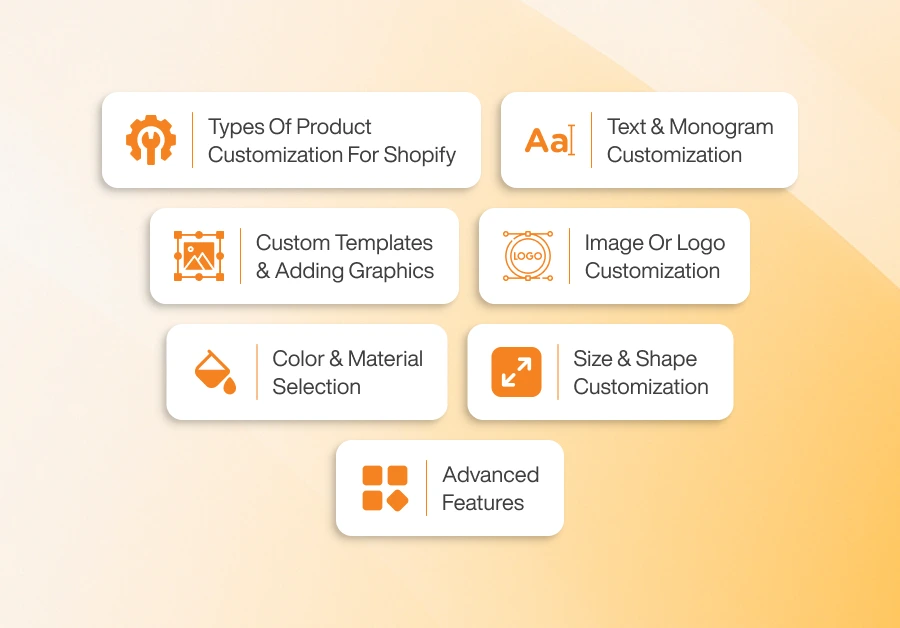
Product customization for the Shopify platform, depending on the apps you use. We’ve researched different product customizer apps and showcased some popular and most used types below:
1. Text & Monogram Customization
This allows consumers to add names, dates, numbers, and short messages (e.g., engraving) to a product. Often used on gifts, apparel, or accessories. All these customization options enhance emotional connection with the product.
2. Custom Templates & Adding Graphics
Shoppers can select from pre-built templates or add their own graphics, logos, or artwork to a product. This customization is popular for business branding or creative products. Consumers enjoy creative freedom, turning the shopping experience into an exciting opportunity to add a personal touch.
3. Image or Logo Customization
Customers can upload personal photos or logos to apply to products such as apparel, mugs, and other gift items. It not only empowers consumers with full control but also enhances perceived value.
4. Color & Material Selection
Product customization’s best part is color & material selection (i.e., fabrics, wood, metal, etc.), where consumers make informed choices with confidence (improve fit & style satisfaction). For example, sneaker color, jewelry stone type, and so on.
5. Size & Shape Customization
This product customization allows consumers to select their preferred apparel, shoes, or other items in appropriate sizes and shapes. This feature not only reduces consumers’ frustration but also ensures that products meet their desired level.
6. Advanced Features
The advanced customization features include:
- Automatically add pricing based on custom choices (i.e., premium color, premium materials, extra text, etc.).
- Conditional logic (shows or hides options) based on previous selections (i.e., show engraving field only if “engrave” is checked).
- Live preview of dynamic visuals or text previews on the product as customers customize.
Top 3 Popular Brands Winning with Product Customization
1. Coast 2 Coast
A leading sportswear brand in Australia, offering well-crafted, high-quality, and excellent custom-designed uniforms, training tights, warm-up tops, and other items. Focusing on custom-made sportswear, the brand differentiates itself from others.
2. Gubbacci
The brand builds visibility through apparel, offering customized items such as T-shirts, school uniforms, blazers, sweatshirts, hoodies, caps, and more. From the initial inquiry to design, production, and delivery, the team works closely with the customer at every step of the customization process.
3. Z Palette
The Z Palette is the most popular custom makeup palette that not only simplifies a makeup routine clutter-free but also helps to organize it into refillable palettes. Customers can design their own Z Palette and pick 8 different palette sizes and shapes for eyeshadows, blush, and powder.
How Product Customization Works on Shopify?
Product customization works on the Shopify platform in two different ways, including:
Using Shopify’s Built-in Product Options
Shopify’s built-in product options represent the method of product personalization. As we mentioned earlier, customization is the customer’s creative space & design freedom. However, it’s clear that Shopify’s built-in product options (size, color, & material) & 2,048 variants per product only allow buyers to pick their favorite item not suitable for design.
The best part: Small businesses benefit from Shopify’s built-in product options.
Key limitations:
- Shopify native options won’t support product complexity.
- No Live preview
- No image upload feature
- No conditional logic
- No additional pricing tiers (add-ons)
Using a Product Customizer App
The best solution for custom product sellers is to use a product customizer app not only for custom workflows but also to provide customers with design flexibility. These product customization tools work as a game-changer.
The best part: Any type of business uses the product customizer app to promote their custom products.
Key benefits:
- Allow unlimited product options and variants, essential for complex products.
- Offer diverse input types, including text, file uploads (logos/images), and more.
- Many apps offer real-time live previews so customers can visualize what they order.
- Includes conditional logic, which helps create a cleaner, more intuitive user experience.
- Allows dynamic pricing to avoid last-minute surprises.
- Automatically generate and send print-ready files.
Best Examples of Product Customization
Some trendy and profitable product customization examples are as follows:
1. Apparel
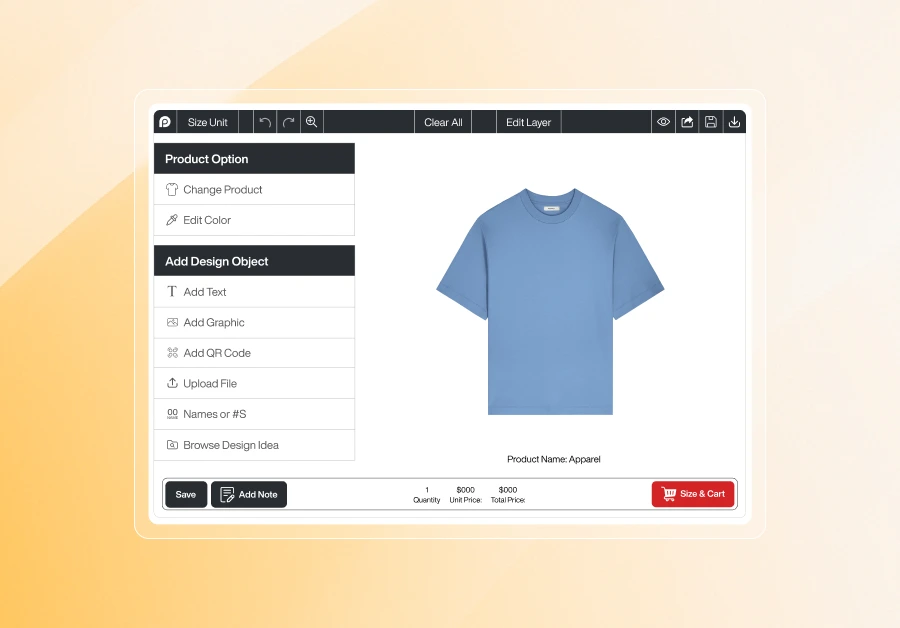
In 2025, Deep Market Insights reported that the global custom apparel market size was valued at $10.500 million in 2024 and is projected to grow to $11,182.50 million in 2025. The number speaks louder; it is a best-selling product for customization. For example, t-shirts, hoodies & sweatshirts, polo shirts, jackets, etc.
Customization types:
- Print-on-demand graphics
- Embroidery
- Text/monograms
- Full visual design
- Adding logos
- A quote t-shirt
2. Food (pie/cookies/ice cream)
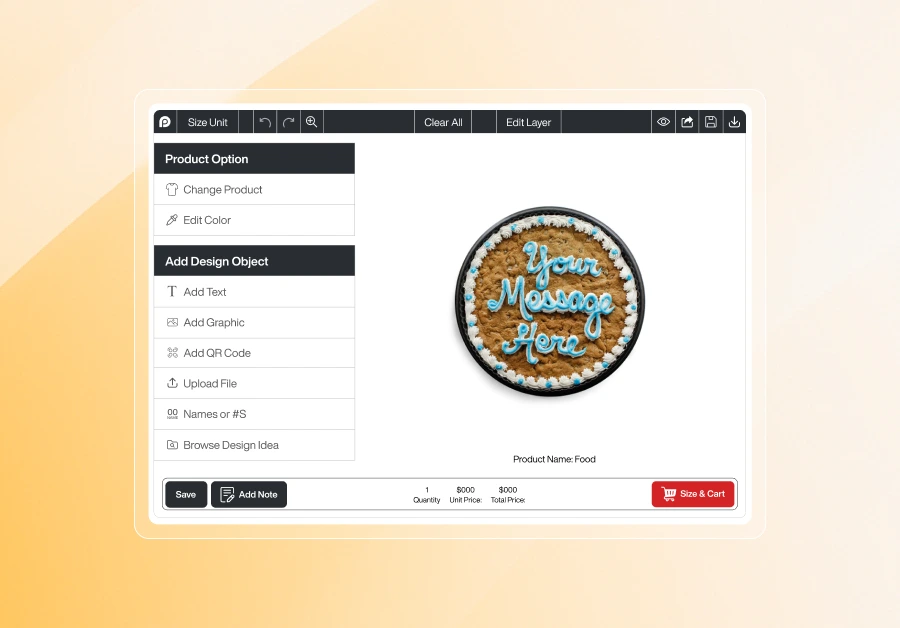
Food customization is occasion-driven and is now an expectation, not just a trend, leading to the “build-your-own” concept. From others, you can set your food & beverage industry or business apart, making food a gift, celebration symbol, increasing perceived value, and creating shareable moments.
Customization types:
- Custom wine bottles and can labels
- Cookies designed with initials
- Custom ice cream packaging text
- Personal engravings on chocolates
3. Shoes
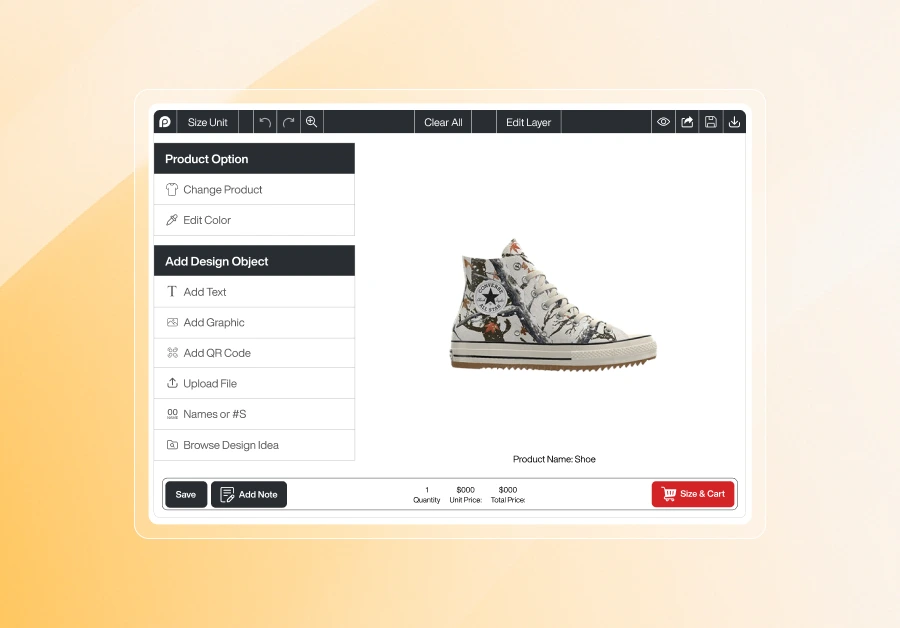
As per statistics, the global custom shoes market is projected to grow from $2.52 billion in 2024 to over $4.04 billion by 2029. The popularity of the shoe industry customization lies in consumers’ uniqueness, which reflects their style. It’s also popular among athletes, sneaker collectors, and fashion-forward consumers.
Customization types:
- Color/material selection
- Custom artwork
- Text labels (name/number)
4. Home & Living
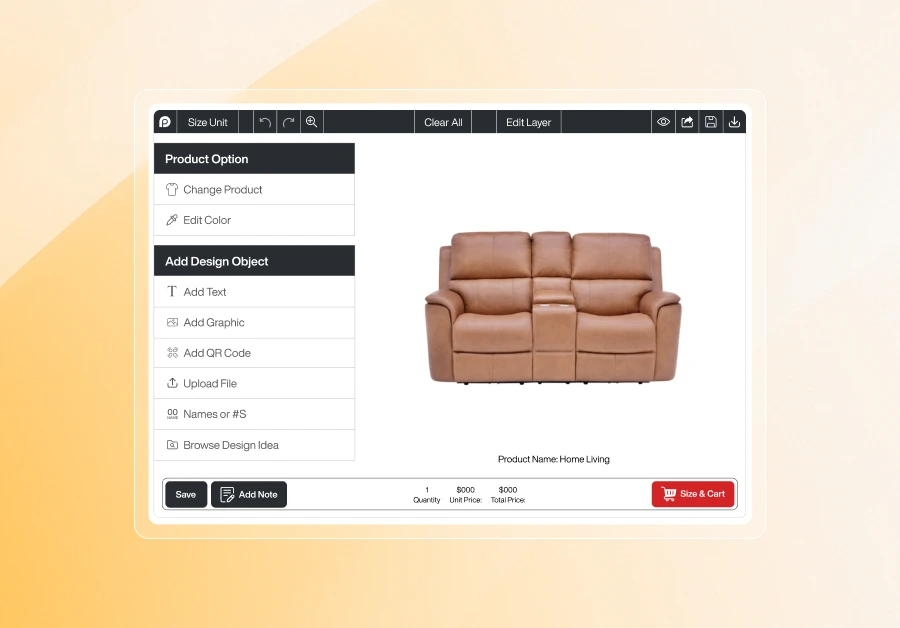
Customized home and living products are the best items for sellers to step into high-demand markets like gifting and decor. People want homes to feel unique and meaningful, where customization adds emotional attachments. For example, custom throw pillows with family names, engraved cutting boards, etc.
Customization Types:
- Custom fabric patterns
- Engraving wood or candle jars
- Personalized decor texts
5. Stationery & Office
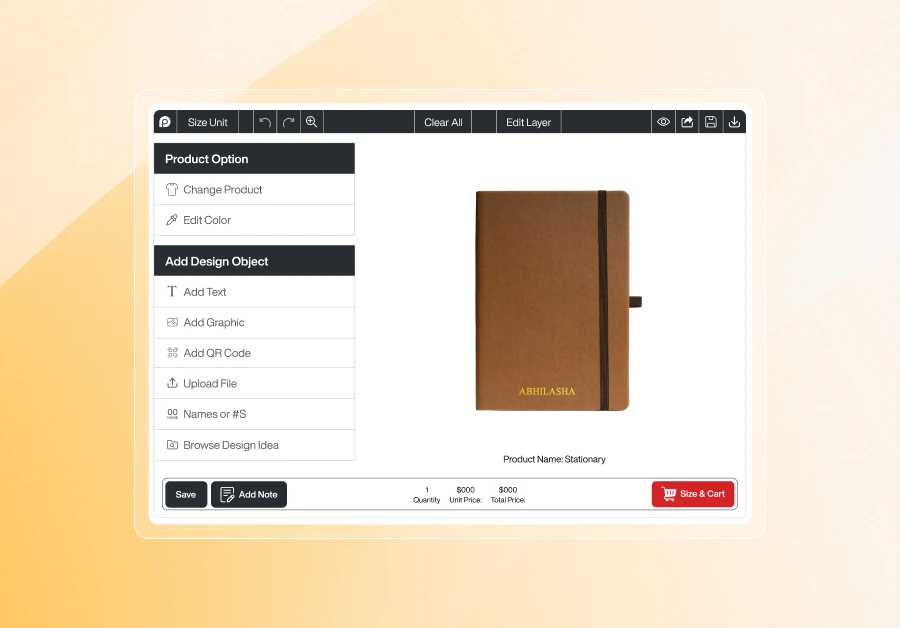
Custom stationery & office items not only showcase the brand identity but also fulfill individual trends. The common form of business item customization includes adding a company name, logo, or tagline to items. Some popular custom stationery items include monogram notebooks, desk accessories, branded corporate gifts, etc.
Customization Types:
- Name/initial engraving
- Logo printing
- Pen body materials (metal, bamboo, plastic, premium aluminum, etc.)
- Gift box customization
6. Accessories & Bags
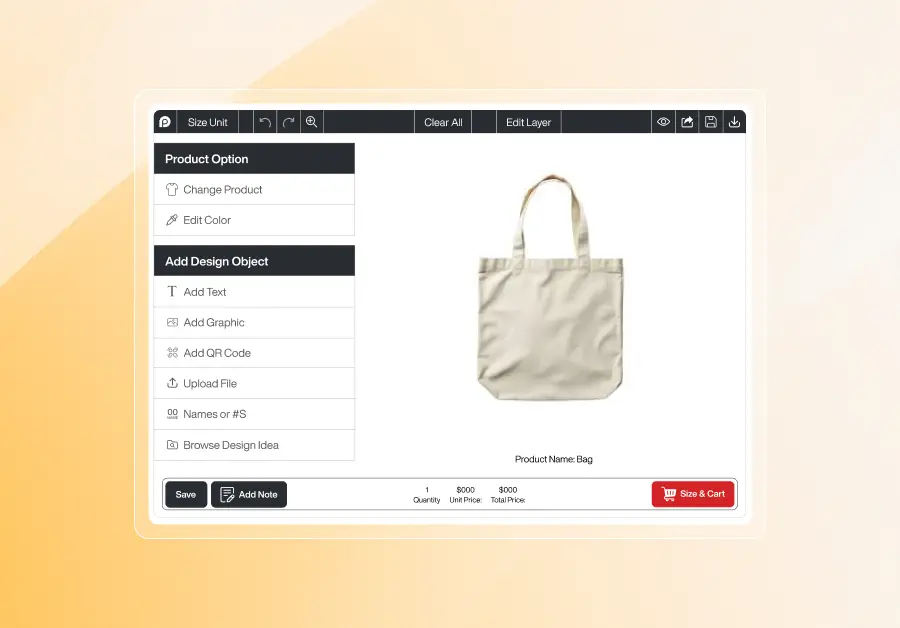
Accessories reflect personality and style. With small custom touches, make these products a premium, personal luxury item. From mugs with jokes to phone cases featuring initials, customization allows you to express uniqueness.
Customization Types:
- Initials and monograms
- Color/material options
- Add patches, charms, or designs
7. Jewelry
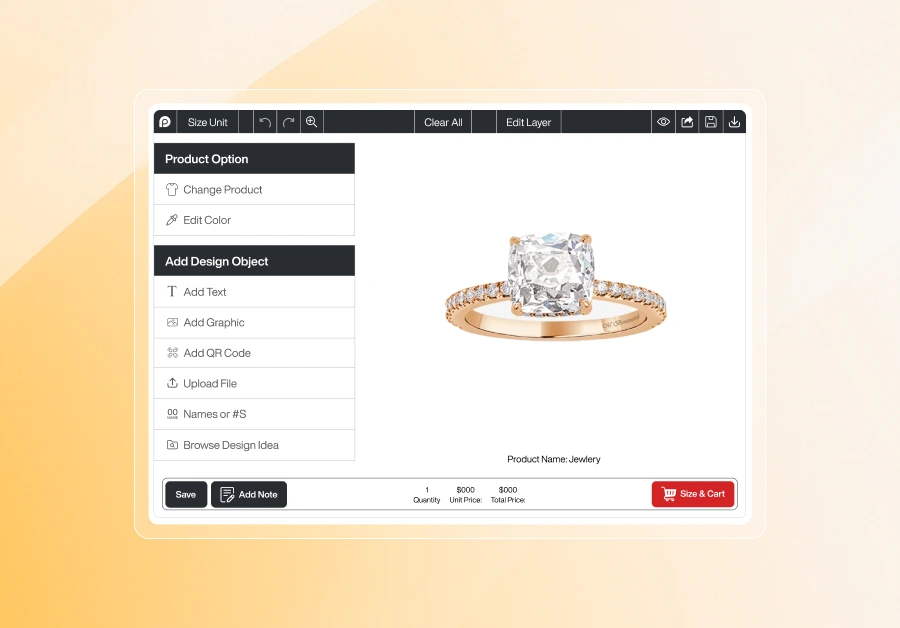
Imagine a pendant with initials or a birthstone. Custom jewelry is emotionally driven, making it perfect for gifts, milestones, and personal expression to loved ones. From weddings to birthdays, graduations, or other occasions, custom jewelry allows sellers to charge more and differentiate themselves from others.
Customization Types:
- Choose pendant size and chain length
- Gold, silver, rose gold plating
- Add heart, star, infinity, or crown icons
- Add additional engraving on the back
8. Electronics
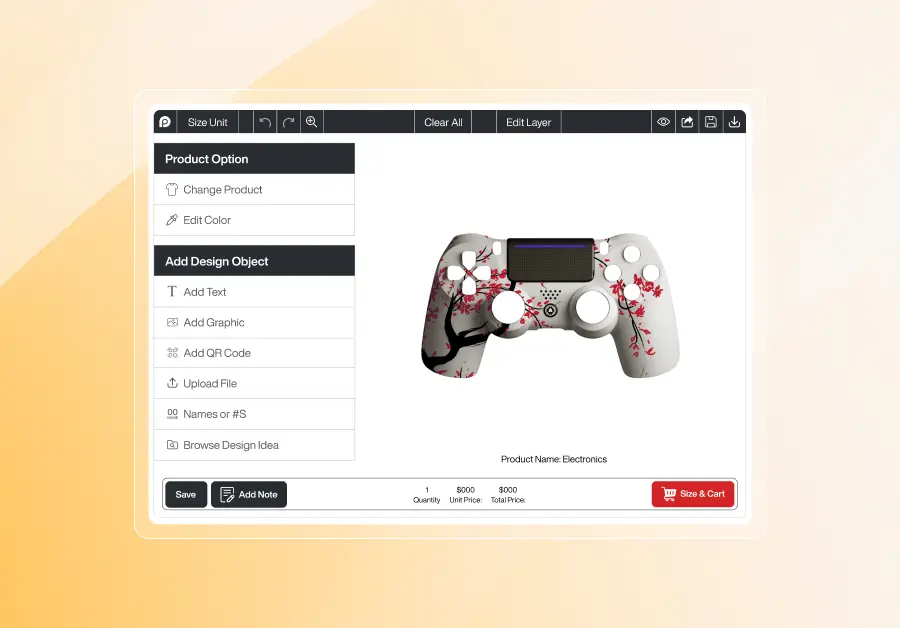
With customization, your consumers can design their daily use of electronic device items like phone cases, power banks, or other gadgets. Electronics are high-value products, and adding customization reduces the risk of mixing identical items.
Customization Types:
- Color customization
- Graphic or photo uploads on cases and skins
- Color, finish, or pattern for the device
- Text, logos, or gamer tags engraved
9. Pet Products
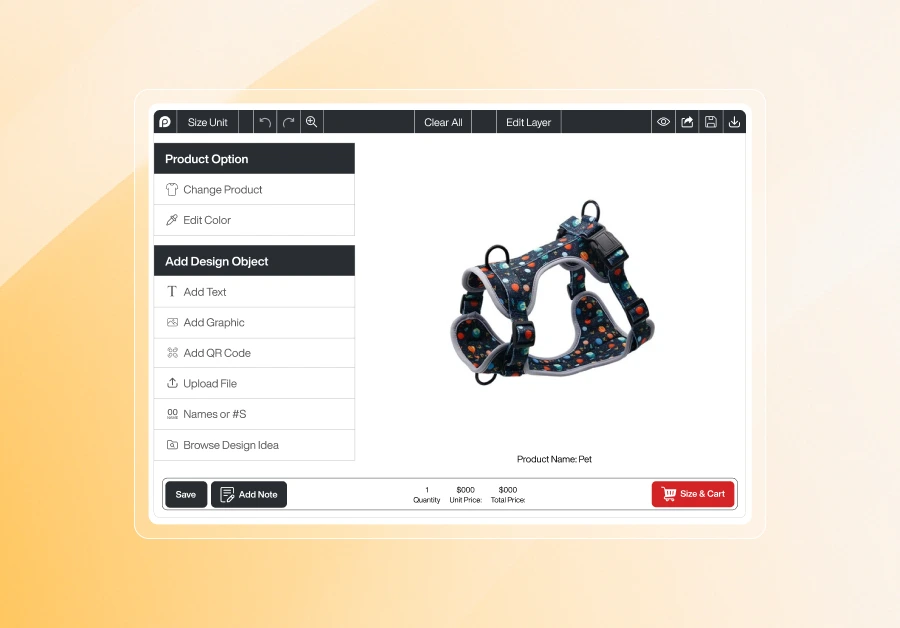
Custom pet products are popular and a booming market, driven by owners treating pets like family or their child. Some popular custom pet accessories include unique toys, apparel, engraved toys, a custom portrait belt, and others that reflect their furry buddy’s personality.
Customization Types
- Signature custom collar
- Personalized pet leash
- Custom pet bed cover or blanket
- Engraved pet bowl
Best Product Customizer Apps for Shopify
When it comes to selling custom products, searching for the best product customization app is time-consuming. So, before selecting one, let’s check out the key functionalities that drive conversions, reduce friction, and support production workflows. For example:
- Device-responsive design flexibility
- Real-time customization
- Flexible file uploads
- Dynamic & accurate pricing
- Easy setup & customization
- High-resolution print-ready files, and so on.
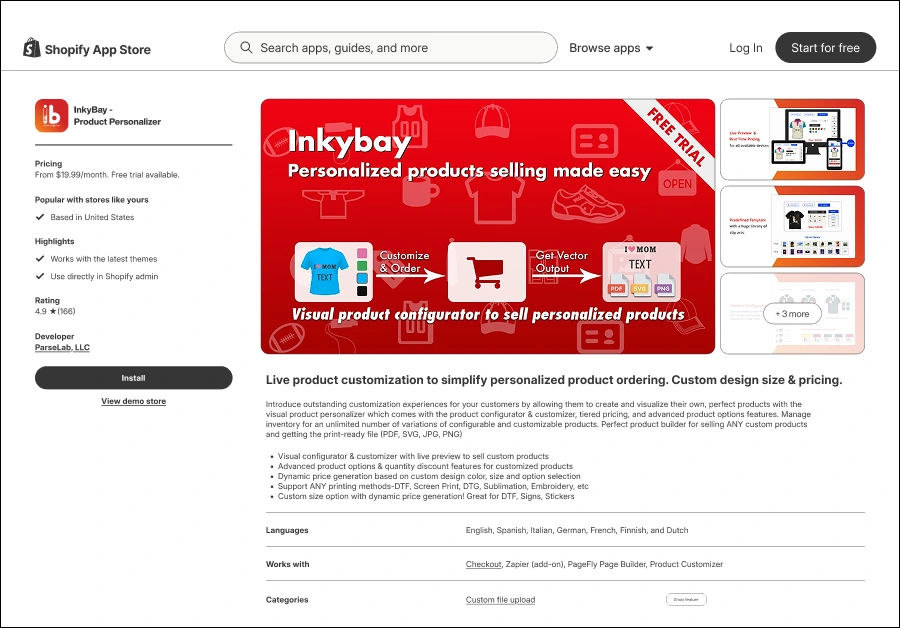
With InkyBay, you’ll get all these core features in one app. What do you get from InkyBay?
- Real-Time Visual Customization & Live Preview: Customers see exactly what they’re designing before clicking the “Order Now” button. This boosts confidence and reduces returns.
- Advanced product customizer app: You can add unlimited customization layers and rules (i.e., text, colors, clipart, upload images, design elements, etc.) with InkyBay.
- Pre-built designs: Merchants create templates that customers can edit
- Dynamic Pricing: Custom products can vary widely in cost (e.g., more text, extra colors, larger sizes). You can set an extra price with this app.
- Print-Ready Vector & Production Outputs: For merchants selling personalized printing services (DTG, screen print, sublimation, etc.), InkyBay’s print-ready vector files (SVG, PDF, PNG, and others) are a must to save production time and avoid errors.
- Workflows for Complex or Multi-Part Products: InkyBay supports configurable products (like multi-panel apparel, signs with dimensions, etc.), different sides, and component-based designs.
- Inventory & Variant Control: With InkyBay, you can easily manage your inventory and easily & effectively.
- Ease of Setup & Customer Support: The InkyBay product personalizer app is easy to set up, and you get 24/7 customer support.
Excited to create your own custom product with InkyBay? Scroll down to the next section now to create one!
How to create customizable products in 5 steps?
The customization with InkyBay is easy to follow & apply. Let’s get started!
Step 1: Install the InkyBay app.
First, install the InkyBay app from the Shopify App Store and get access to the app from your Shopify store. For a detailed installation guide, check out the InkyBay Installation Guide.
Step 2: Select the “Products” option.
Now, click the “Products” option from the top bar and then select the option “Create Custom Product.” Here, you’ll see all your Shopify store products.
Step 3: Create a custom product.
Now, choose the product from the listings and click the “make it customizable” button. A new window will open up where you’ll explore different product options:
- Product sizes (Open sizes, Adult Sizes, Youth Sizes) – select preferred sizes or create a “New Size Set.”
- Printing types (select from supporting print types or add your preferred ones)
- Quantity Discount (if you want to offer, create a “New Discount Set”)
- Product colors (either choose from the existing color set or create your new color set) [Reminder: You can also add different images per color set.]
Step 4: Advanced settings option.
Here, you need to upload a background-removed white PNG product image. Also, you can add new sides (front, back, left & right). Now, click the “Print Area” option on which customers will add their design. After that, click the “Save” button.
Step 5: Activate the customization.
A pop-up will show to get your permission to Activate Now or Cancel the design.
Note: When you add/edit Printing Types, you’ll be able to set basic printing pricing, printing colors, price per color, price per size range, and set restrictions. Now that all is done, go to the product page where you’ll see the “Customize IT” button & your selected colors. When your customers click the button.
Tips for successfully selling customized products
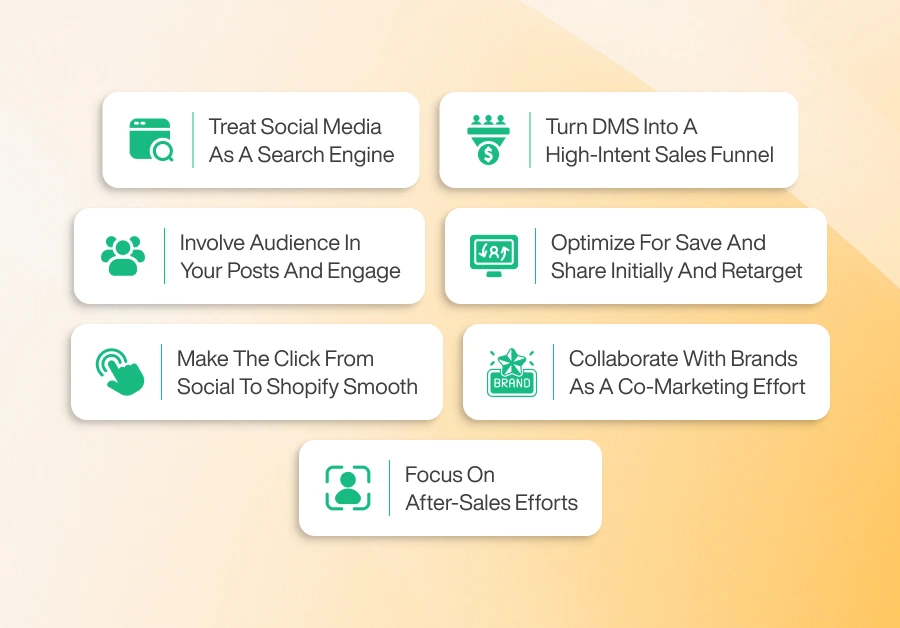
As you discovered, selling customized products is highly profitable but also requires strategic planning. Here are some effective seller-focused tips that help to sell custom products effectively.
1. Pay attention to the target customers
Not every customer desires to buy custom items. So, before storing products and planning a business strategy, find out who your target customers are. Research helps you understand which product features, styles, or functionalities your customers value most. Also, you can determine if customers prefer a premium price for high levels of personalization or value others.
Actionable steps:
- Identify demographics (age, gender, lifestyle, income, hobbies, etc.)
- Segment by use case (gifts, personal use, corporate branding, events)
- Study customer behavior (do they respond to fun designs, luxury personalization, or practical customizations)
2. Select products & customization options
Offering the wrong product and an overly complicated customization process, you risk high cart abandonment rates and increased return rates. So, it’s ideal to focus on a few products and allow you to master production quality before scaling.
Actionable steps:
- Start with products that naturally lend themselves to personalization (mugs, apparel, jewelry, phone cases).
- Limit customization options initially to the most impactful ones (color, text, image).
- Gradually expand options based on customer feedback and demand.
3. Do competitor research
Analyze similar niche markets or e-commerce stores to get an idea about their products, pricing, and customer engagement tactics. Not only that, but you also explore what product customization features can set your store apart from others and attract shoppers the most.
Actionable steps:
- Study competitors’ top-selling items and customization options.
- Note their pricing, shipping, and return policies.
- Identify competitor gaps, such as can you offer more options, better previews, faster delivery, or premium materials?
4. Offer live previews
Visuals are key to online sales to build sellers’ trust and ensure repeat purchases. Offering real-time previews, customers can see exactly what their customized product will look like before buying, which reduces returns.
Actionable steps:
- InkyBay’s Design Lab offers a live preview that allows customers to visualize their designs.
- Allow zooming and rotation if applicable (e.g., jewelry, apparel, mugs).
- Show examples of how customization looks in real life.
5. Choose the right pricing strategy
Set competitive yet profitable product pricing. Custom products often lead to a high AOV, especially when buyers order bulk or select premium features. So, to maintain transparency and design extra pricing, you can use a product customizer app with price updates.
Actionable steps:
- Base price on product, customization price & printing price.
- Show dynamic pricing if options affect cost (e.g., larger sizes, extra text, premium material).
- Include optional add-ons for upselling (premium packaging, gift wrapping).
6. Showcase delivery time
Sometimes customized products take longer to produce. Showing the delivery time on the product page can significantly increase customer satisfaction and conversions. For customers with specific deadlines (i.e., gifts for birthdays, Halloween, or Christmas), knowing the delivery window is essential.
Actionable steps:
- Clearly indicate production and shipping time on product pages.
- Offer express options if possible.
- Provide tracking updates after the order is placed if possible.
7. Leverage social media for marketing
Social media platforms provide unique opportunities to showcase personalized products. Your goal is to highlight the customization experience, not just the product. Also, custom products have strong performance with:
- Lookalike audiences
- Interest-based targeting (pet owners, couples, gamers, etc.)
Actionable steps:
- Post short 6-12 sec reels/TikToks demonstrating customization
- Add a trending video to increase views
- Run a monthly contest: “Share your custom product and win a free one.”
- Schedule weekly “Design of the Week” spotlights
Conclusion
Product customization is no longer a “nice-to-have”; it’s a key differentiator that can drive engagement, increase average order value, and create lifelong customer relationships. By offering clear customization options, intuitive design tools, and high-quality personalized products, you can turn store visitors into potential buyers.
FAQ’s: Product Customization Guide for Shopify Sellers
What is an example of a customized product?
A primary example of a customized product is a pair of sneakers where the customer chooses colors, design, size, and adds personalized text. For example, brands like Nike (Nike By You) allow buyers to design a one-of-a-kind show that reflects their personal style.
How do you offer product customization on e-commerce stores?
Use the product customization software and POD apps to offer customizable products on your e-commerce store. The Shopify App Store includes hundreds of apps, such as InkyBay for product personalization and customization.
What are the challenges of offering product customization?
The key challenges of offering product customization include: not finding the right product personalizer app, manufacturing efficiency, managing customer expectations, marketing challenges, etc.
Why does customization of products matter in e-commerce?
Product customization in e-commerce matters to meet consumer demand, boosting engagement, reducing returns, and increasing sales by creating personalized experiences.