

Last Updated on December 19, 2025
Key Takeaways
- Social media selling means using platforms strategically to turn casual scrollers into paying customers—not just chasing likes or views.
- With the right approach, social media helps you reach high-intent buyers, reduce customization risks, and influence team or group purchase decisions.
- Most generic social media advice fails because it focuses on algorithms instead of purchase intent, ignoring the buyer’s real decision-making journey.
- Effective social selling strategies focus on the entire purchase journey, including the “messy middle,” not just clicks or reach.
- Proven tactics—such as treating social platforms like a search engine, turning DMs into a sales funnel, and optimizing content for saves and shares—give you a competitive edge.
You are posting reels, boosting your posts, and adding a link to your bio, but somehow your Shopify dashboard looks quiet and nothing seems to happen. We totally understand that feeling.
Almost every social media selling tip tells you to add trendy music, work with influencers, or add shoppable tags, but those tips really do not work on their own!
What no one talks about is how people decide to buy and how you may end up in the ‘save for later’ box. The gap feels even bigger if you’re running a personalized business where every step feels like a risk.
In this blog, we will go deep into how customers think and provide proven tips that work. So let’s see!
What is Social Selling?
Using social media for selling, growing your brand, or connecting with the audience is what Social selling means.
Social media has quietly become one of the most popular and biggest-selling channels. Nowadays, social media is used for various purposes, not just to showcase products and gain more exposure. Social selling involves brands engaging with potential buyers to establish a relationship, display social proof, and guide them through the buying journey.
Many tend to confuse social selling with social commerce, but there’s a difference. It is much broader than social commerce. Where the term “social commerce” refers to transactions that occur within social media platforms, on the other hand, social selling involves influencing the entire decision-making process. Social selling has an impact on the initial decision-making process, from purchase to everything in between.
In the personalization business, social selling involves incorporating customers’ designs, showcasing social proof, and featuring other customers’ designs to inspire new customers, while also addressing any confusion to remove uncertainty even before they click ‘Customize’.
Top 5 Benefits of Social Selling for Ecommerce Businesses
You can no longer treat social media as just another sales channel. It has become something even more beneficial. Social media is where active consumers live, research, and make purchasing decisions. Here are a few of the benefits that you can unlock with social media selling:
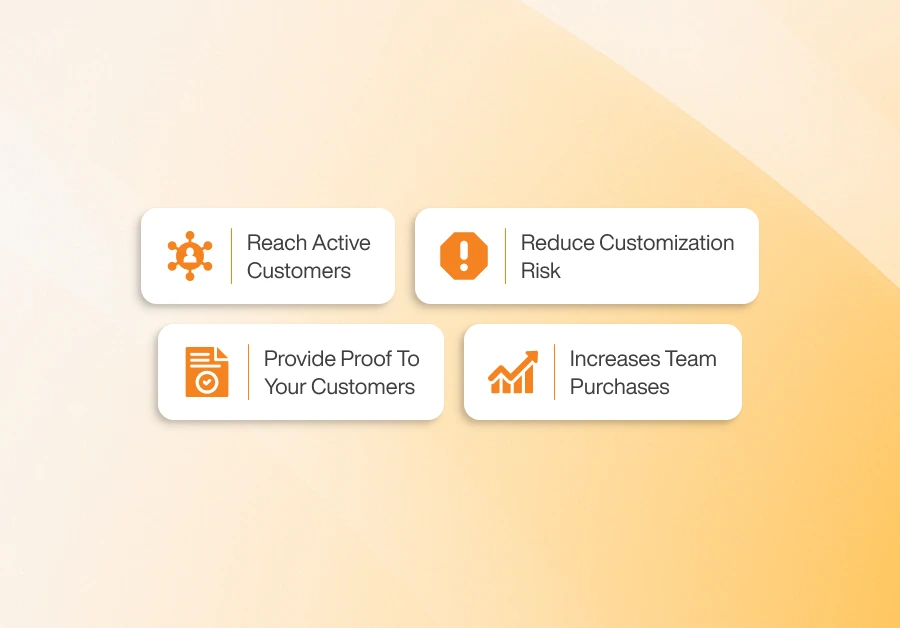
- Reach Active Customers. Social media has become a hot spot for potential customers nowadays. People spend increasingly more time on social media, and almost every other purchase decision is influenced. As of 2025, Research by Global WebIndex indicates that 63.9% of the population worldwide spends approximately 2 hours and 21 minutes scrolling through social media. This means you have the opportunity to influence your customers for a long time. Selling where customers are active is both easier and more efficient.
- According to Grand/ View Research, the global social commerce market was about $1.16 trillion in 2024, projected to grow to around $17.83 trillion by 2033, at a 36.5% annual rate. This data shows that a significant portion of sales is occurring on various social media platforms, rather than on traditional ecommerce platforms. By taking your ecommerce business to a social media selling channel, you are increasing your chances of reaching a broader audience base. As more people use social media to make purchases, your business will have more opportunities to appear in the feeds of an increasing number of users.
- Reduce customization risk with Social selling. Personalized product businesses come with additional risks and doubts about whether they will truly succeed or not. With social media, you can actually mitigate this risk. Simply launch a personalization concept as content, and observe how your customers react; you will gain insight into their thoughts.
- Provide proof to your customers, not just general reviews. For a personalization business, pursuing customers is tricky. Customers not only ask, ‘if the brand is legit?’ but also want to know, ‘if the custom design will actually work and look good?’ This is where social media acts as your saviour. As you share your previous work and customers’ design side by side, customers will feel at ease and convert without hesitation.
- Engaging social content increases the probability of team purchases. For Shopify personalization businesses, it is crucial to stay ahead of the curve. Social content that provides customers with insights into your products or engages them in a relatable way keeps you on the mind of your customers. It also triggers conversation about your business and increases the chances of a team purchase. For personalization businesses, it is super helpful. In a 2024 study, 66% of buyers admitted to purchasing after seeing someone else’s post.
3 Reasons Why Generic Social Media Selling Tips Don’t Work
For personalized product businesses, generic social media tips don’t work. You need to focus more on converting the traffic rather than just generating it. Although they are not wrong, when they advise you to post constantly, increase collaboration, or run ads, you just need more to reach your ultimate goal.
Here are the reasons generic social media selling tips don’t work:
i) Generic Tips Are Built For Algorithms, Not For Actual Buying Behaviour
Most social media selling tips are based on vanity metrics to increase reach, likes, followers, and overall engagement rate. But they do not address the fact that high engagement doesn’t guarantee high revenue.
If we look into the recent failing social media strategies, some familiar patterns are seen:
- Brands are mostly chasing impressions and likes.
- Most of the strategies do not define the actual path from content to checkout.
However, recent consumer behavioral pattern studies reveal that a few variables play a role in moving people closer to purchase. The variables include:
- Trust in the brand and platform.
- Meaningful interaction with the brand.
- Social proof that serves a purpose.
Generic tips might help your business get seen, but not necessarily get chosen. Your personalized business needs personalized tips that work to build a funnel that will lead to conversion, not just engagement.
ii) Ignores the Messy Middle and Focuses More on the ‘Click’ Button
Most generic tips revolve around the idea that you need to make your posts shoppable and include a link to your product. But they tend to ignore the most difficult part, ‘getting buyers to click on the link’. It is crucial to address these aspects to take your potential customers to the click button:
- Does the landing page visually match the reel?
- Do they have to rebuild the template that initially attracted them?
- Is the path from idea to checkout as short and smooth as possible?
Several customer journey research studies conclude with the same insight: people engage with brands across multiple touchpoints, and any friction or mismatch between them causes a drop-off. However, generic tips do not touch on those points and don’t provide a solution based on the mess in the middle. In customized businesses, you must ensure that the transition from social to a Shopify store feels seamless. For example, if one customer taps on a t-shirt they loved on Instagram and ends up on a blank canvas, they will lose interest instantly.
iii) No Talk About Platform-Specific Efforts and Audience Behavior
The list of one big bundle of ‘best practices’ doesn’t work the same for all social media platforms. Every social media platform is built with a distinct audience base and corresponding interests. Which means the conversion will be different on each platform. For example:
The average conversion rate on TikTok Shop is 3.2%, primarily consisting of Gen Z and young millennials. In contrast, Instagram reels conversion rate is around 4.2% consisting of mostly millennials and the older generation.
Different platforms attract different audiences and have significantly different conversion rates. So when you are following generalized tips, you are missing:
- Who your buyers are on each platform.
- How they use the platform.
- What type of content naturally leads to purchase on specific platforms.
Ultimately, you may not see results and end up just trying to generate some engagement.
How Customers Decide to Buy from Social Media: Study-Based Insights?
Before we dive into the actual tips of social selling, we must understand how customers think and make purchasing decisions. Here are some research-based points that contribute to the buying decision of a customer:
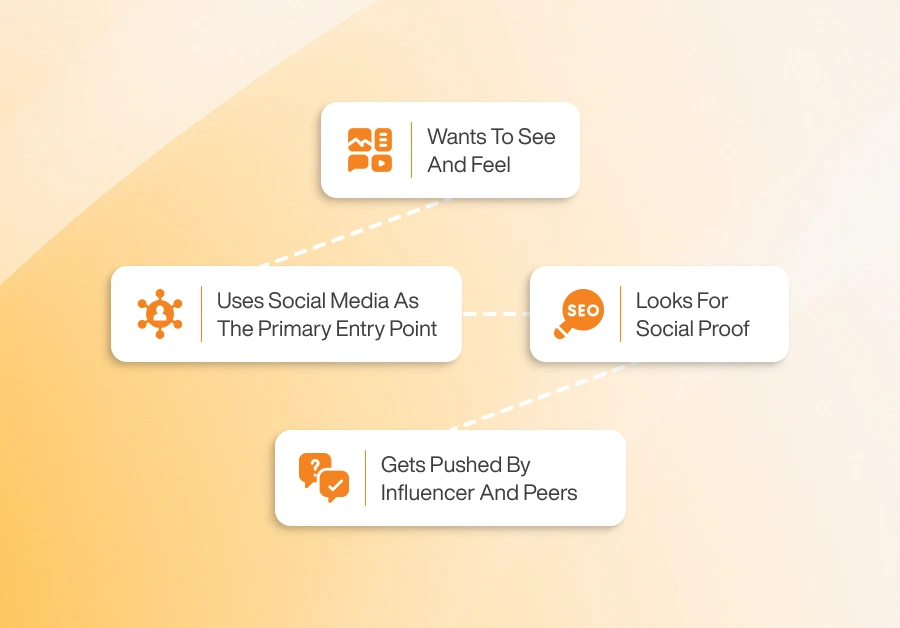
Customers Look for Social Proof Before Buying
Before making a purchase, customers actively seek information from various platforms and look for validation. Chen, Ly, and Wang studied social-commerce using social learning theory and discovered that consumers actively learn from three components (Forums & communities, Ratings & Review, Social recommendation) before making a purchase.
Additionally, it has been proven that review credibility, authenticity, and emotional tone significantly influence trust, which ultimately shapes the purchase decision. Simply said, buyers want to know if buyers like me had a good experience or not. If they had a good experience, they are more likely to make a purchase.
Customers Want to See and Feel Themselves Using the Product
Shoppers are most likely to be persuaded by high-quality images and short, story-like videos. These help with the mental simulation of the products. The imagery simulation, backed by strong content, makes the consumer feel more confident in making a purchase. A study by Deng shows that videos that showcase similarity with the streamer mostly influence consumers’ purchase decisions.
Uses Social Media As The Primary Shopping Entry Point
With the increasing rise of social media, buyers treat social media as their primary buying channel, not just as an entry point to the actual e-commerce site. Multiple studies highlight that people often begin their buying journey directly from social feeds, rather than through Google or marketplaces. Some study insights are:
- PwC’s 2024 survey for the Asia Pacific found that 56% of the study’s consumers had purchased directly through social media.
- In 2025, the US surveyed 1002 consumers and found that more than two-thirds of them made a purchase through social media at least once a month, and 22% had bought more than 10 items via social media.
- Another study shows that 58% of US shoppers and 44% of UK shoppers purchased after encountering the product on social media.
Now, the intention and the overall study funnel have changed and leaned toward social media the most. The purchase funnel has shifted from ‘Search → Compare → Buy’ to ‘Scroll → Get Intrigued → Search for Social Proof → Feel Safe → Buy’.
Gets Pushed by Influencer and Peers
A 2024 report shows that nearly half of consumers purchase products recommended by an influencer at least once a month. As the days pass, influencers are increasingly exerting a strong influence on customers’ interests and their purchasing decisions. As of 2025, 63% of the younger consumers are particularly influenced by influencer marketing. With the influence, shoppers get an idea of the product and tend to relate to the celebrities.
7 Proven Social Media Selling Tips for Shopify Stores
Proven evidence-based social media selling tips like treating social media as a search engine, understanding your audience before implementing, turning DMs into sales funnels, and more will ensure your efforts can bring results. So let’s explore the tips and understand how you can actually implement them in your store:
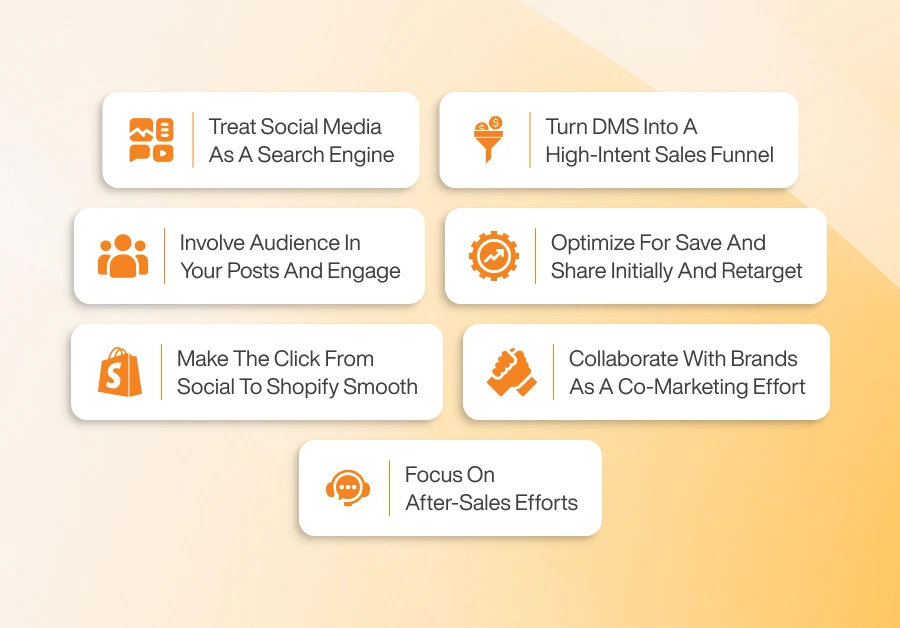
1. Treat Social Media as a Search Engine for Your Niche
People nowadays do not just scroll social media; they search on social media. So, stop treating your social media like a billboard and make it a mini search engine that will actually drive results.
Studies find that 61% of people use Instagram as their primary platform for product discovery, and 77% of Gen Z users rely on TikTok as their exclusive source for finding products they want to buy. That means your posts and videos on social media are used as a way to answer audience queries and influence their purchasing decisions.
Popular community conversations often showcase how people initiate discussions based on products and designs they have liked on social media. On Reddit, experienced Shopify owners constantly advise knowing your target market deeply and not targeting anyone with a pulse. They also imply understanding potential customers’ age, location, income, pain points, and then creating content around that niche, just like you would do on any search engine.
Here’s how you can turn your social media into a search engine:
- Conduct in-depth keyword research and compile a list of queries that your target buyer actually searches for. Address each of those queries in your social content to end up in their searches.
- Answer their question directly in one line or one word to serve the ‘always busy’ audience.
- Add SEO-friendly captions that include relevant keywords and on-screen text. This not only helps with social searches but also helps you to appear on snippets.
Key Takeaways
Social media is no longer a typical scrolling platform; it’s where purchase decisions are made, searches are conducted, and brands are filtered. You need to enter this market prepared with keyword research, direct answers, and SEO-optimized answers.
2. Turn DMS into a High-Intent Sales Funnel
Messaging is where real sales happen and where you actually get to know what’s in your customers’ heads.
Using chats and messaging apps to provide customers with recommendations and answer their specific questions is defined as conversational commerce by Shopify. The new Shopify inbox is specifically built for you to send product links, discount codes, and images directly in chats, enabling you to close sales right there. When Shopify itself pushes to close a deal in one place, you understand the importance of being efficient in closing the deal right in the momentum.
Customers who follow you on your DMs are not just casual product seekers; they are the actual audience you were looking for. By attending those audiences, you can turn them into customers who are likely to buy your products.
You cannot simply implement auto-messaging for common and frequently asked questions without giving it a second thought. Putting effort and answering each DM like they are your client is actually what generates sales. If you just take a look at popular Reddit threads, you will find posts from people saying they achieved the first sale only after manually replying to 50-100 DMs on social media platforms like Instagram or TikTok, not from ads, but from genuine care and honest answering of the customer queries.
So how can you turn your DMs into a high-intent sales funnel? Here’s how:
- Create an instant DM answer that sounds human and can interact with new customers instantly.
- Answer elaborately based on their queries. Avoid answering in a generic tone and pattern.
- Add a direct link to the product that can serve their purpose. If you are selling customized products, you should provide previous client designs or a template that will serve as guidance and turn the seekers into customers.
Key Takeaways
Real sales come from DMs, not from social media ads. To make your DMs truly sales-focused, make them human and interactive, avoid generic answers, and add a direct link to the product.
3. Involve Audience in Your Posts and Engage
Today’s audience wants to be a part of the drop and feel like their opinion is valued. They don’t just want to watch your product drop.
Shopify’s recent social media trend includes mostly behind-the-scenes, POV, and interactive formats. You can also see these types of posts being top-performing on different social media platforms, increasing engagement and including customers in the process.
Different Reddit forums also suggest that successful Shopify store owners earned their best sellers with posts like ‘Which version do you like?’ ‘What type of product do you use daily?’ ‘Rate the Design’, ‘Which color you love?’ or ‘What else would you like to see?’
Additionally, several Reddit users admit to buying from brands with which they can connect, not just those with attractive ads.
How can you implement it in real time?
- Use story-based content to capture customers’ attention and solicit their input. Ask questions like ‘Pick the color for your next personalized mug’, ‘What should this blank hat feature?’, ‘How would you design this blank hoodie?’ and other interactive posts and questions like these.
- Treat customers’ responses as live product research. The answers you get from customers consistently turn them into actual SKUs or a base template.
- When you include customer ideas into your store post follow-up posts, say ‘you voted, we listened’ or caption the designs ‘you helped us design this masterpiece’. What would this do? Make customers feel like they truly matter and that their input is being taken into consideration. This small gesture would hold your customers in your store for a long time.
The loop of ask → build → show → sell continues and grows over time. As customers feel like co-creators of your business, not just a mere audience.
Key Takeaways
Make your customers part of the whole product journey. Get your best-selling items with story-based content that shows customers’ journey, treat their customer engagement as live product research, and post follow-ups that show genuine appreciation for your customers’ opinions.
4. Optimize for Save and Share Initially and Retarget
A like is just ‘this is nice’ or ‘this is good content’.
Where a saved post means ‘I might buy this later’.
Ending up in the saved-for-later might seem like defeat, but in reality, it’s taking a step further than just having tons of likes. One ‘Saved for Later’ means one potential customer who is interested in what you sell.
Social media platforms literally rebuilt their algorithm around this concept. A study of Instagram analysis shows that saves and shares are now weighted above likes as a ranking signal. Saves are also considered the strongest indicator of long-term value and intent.
Social media guides also call for a focus on shares and saves as critical engagement metrics. This behavior directly implies that customers want to come back for more of such product content or recommend it to others.
Creators and marketers on Instagram also report that posts with higher save counts drive more profile visits, follows, and conversion days or weeks after the save.
So if you really want to boost your Shopify sales on social media, make your social posts more ‘save worthy’ and ‘share worthy’, and then you can easily retarget those who have shared and saved your content. This increases the chances of conversion and gives your overall social media a boost.
To implement this social media selling tip, follow this:
- Include checklists and cheat sheets in your social media. Provide an audience that will actually be valuable when they are purchasing similar products. For example. ‘Checklist before you buy a custom hoodie’ or post like ‘save this chart so you don’t mess up your custom order’.
- A step-by-step carousel of confusing product topics is also a great way to end up in the save and share list. For example, you can post content like, ‘How to choose the right fabric for a custom t-shirt’ or ‘How to prep your design for best quality output’.
- When running a POD business, you will have the advantage of posting an interesting template that customers can actually use. For example, post ‘10 jersey pattern idea that actually works’ or ‘5 minimal cap designs to look cool’. This would address not only the interest of the audience but also address the pain point of not having a direction to choose the right design.
- And then, when you end up in the saves and share with the audience, retarget them with ‘closer to purchase’ ads, build audience-specific ads, and mirror the post they have saved or shared in your ad to ensure the potential customer remains interested.
Key Takeaways
Your real goal should be ending up in the saved-for-later box and increasing your post share count. Include posts that truly create value for your customers, such as cheat sheets, checklists, step-by-step carousels, and design templates. When you end up the saved later box, or customers feel you can retarget them with more sales-focused posts.
5. Make the Click from Social to Shopify Smooth
When the audience interacts with your reels and posts, they’re in a fragile state. They are just curious, not committed. Your next screen can make or break this deal.
If your sales funnel appears different from what your audience just saw on the reels and stories, or if the process is slow, you will lose the curious customers, and there is no middle ground. Shoppers nowadays rely on their smartphones for most of their shopping. According to Shopify’s statistics, 68% of shopping is done on mobile, but mobile conversion still lags. If your social media-to-website optimization still doesn’t count mobile users, you are doing it all wrong.
Social platforms like Instagram and TikTok are literally built with the idea of See → tap → pay. Every other guide of social commerce keeps repeating the concept of reducing steps between discovery and purchase. This is what makes social shopping smooth and converts better.
Now let’s talk about what actually a smooth transition might look like, according to the shopper: suppose your potential audience is doomscrolling and they see your reel about an oversized brown t-shirt with a cool mandala print on the back, that also features ‘add your text’ on the front, the audience taps it, and it appears on the landing page, where they see the exact brown t-shirt with the exact mandala print on the back and a box to add their text to make it really their own.
No hunting where the t-shirt is; no blank product that does not closely resemble what they have seen earlier. And here you have it: a very smooth transition. This continuity of the process is actually what users like; their brain doesn’t have to reorient, so they can stay in buying mode till the last.
Here’s how you can implement this social media selling tip in your Shopify store:
- Match the click destination to the social content. If the post features a red hoodie with one pocket, then the landing page must display the exact same hoodie, not a generic hoodie collection.
- Cut out the unnecessary in-between pages. Don’t send people to the homepage or to a generic shop page.
- Make mobile checkouts super easy by including express payment methods, autofill information, and fewer fields so that customers can complete the process without delay.
Key Takeaways
The road from social media post to product checkout must be smooth. Match the destination to the social post and cut anything unnecessary in between. Make sure your customers are not being distracted from what actually attracted them to your Shopify store.
6. Collaborate with Brands as a Co-marketing Effort
Collaboration is not exclusive to big brands. Small Shopify stores can utilize this co-marketing effort by pairing with other small brands. This is one of the fastest ways to sell more on social media without burning a hole in your pocket with ads.
This is called Collaborative marketing and co-branding by Shopify. When two brands with overlapping audiences but different products promote each other, they can extend their reach and drive sales. Studies have found collaboration to be more effective with younger audiences. A 2021 study revealed that 71% of Gen Z and millennials report loving brand collaborations. So when you see two brands come together and drop each other’s products, it’s not just aesthetics that people respond to. It’s what brand collaboration does.
Such collaboration is especially effective for social media selling, as audiences are constantly filtering ‘Is that a legit brand?’ ‘Is this for me?’. Collaboration answers all those questions. If you could somehow collaborate with brands that the audience already likes, you would get borrowed credibility. Guides from Shopify noted that co-branding can increase awareness and help partners reach new, yet relevant, heights.
Different collaborations, such as complementary-not-competing, Audience overlap from various angles, and social-first work well for Shopify stores. Here’s how you can utilize brand collaboration:
- Select complementary brands that do not compete with your products but complement them. For example, if you sell POD apparel products, you can collaborate with gym or coffee brands. Also, check if the brands are active on social media and engaging with their followers.
- Keep the collaboration content and social posts super simple to understand. Use a clear social CTA that takes the audience to your store.
- Run a joint campaign with a clear funnel, not a random social post that leads nowhere. Treat the overall collaboration like a new launch and include all the phases from teaser to the urgency phase.
- Create a separate landing page for collaboration, allowing you to track the traffic you are generating and the performance of your sales.
Key Takeaways
Customers love collaboration, and it answers all their doubts. Collaborate with brands that have a similar audience to yours but do not compete with it, keep the posts and message super simple; running a joint campaign is also very helpful.
7. Focus on After-Sales Efforts
Turning one order into more orders isn’t a myth; it’s what social media can do with the after-sales efforts.
One of the most overlooked social selling moves isn’t what you do before the order rolls in; it’s what you do after one order comes.
Brands that stop their selling efforts at ‘thanks for ordering from us’ remain behind, and smart brands that turn every customer into a walking piece of social proof or a mini affiliate who brings the next customer outshine them. Such efforts are called user-generated content or UGC. Studies have found that UGC is insanely persuasive; around 77% of shoppers are more likely to buy a product after discovering it through UGC.
UGC also has a massive impact on customers’ emotions and purchase intentions. A 2025 study says referral ranking converts 3-5x better than other sales channels. So if you are deliberately putting efforts into making your happy customers into referrals or content, then you are leaving your profits behind.
Another reason you need to continue putting your efforts after making a sale is that social media is a platform where people see and judge you. When someone posts a reel, story, or photo about your brand, it serves as proof for the audience to trust you. It directly says to the customer ‘Hey, I am not a scam and you can freely order from my brand.’ This is how you can double down on your existing customers. The loop is simple: Order → UGC → Referral → New Order.
Here’s how you can continue your after-sales effort and double your existing customers:
- Make your customers feel valued with the right content at the right time. Send a post-purchase email or SMS within 2-5 days of delivery, asking if everything was okay and inquiring about the customer’s satisfaction level. Sending a small gift card that relates to your customers’ interests helps keep them informed and engaged.
- Make sharing genuinely rewarding without making it too complicated. You do not have to give out huge discounts or offers; you can simply offer 10% off their next purchase, or you can host a giveaway upon sharing, offering early access to a new design on a special occasion, as a reward for sharing their experience, is also another great way to boost reviews and social proof.
- Take your business further by turning your customers into affiliates. You can offer 10-20% off when they suggest a friend to buy your product. This ensures the expansion of your business and also enables you to reach a wider audience through a trusted source.
- Whenever a customer tags you in their post, make sure to repost it on all your social media platforms to turn it into the best social proof.
Key Takeaways
Turning a blind eye to the after-sales effort would only reduce your customers’ potential. You need to turn your existing customer mini-affiliates by making them feel truly valued, offering rewards for sharing your brand, or taking your business strategies further.
Why POD and Personalized Stores Have an Advantage on Social Media (With InkyBay)?
Let’s see why POD and personalized product businesses have an edge when it comes to social selling, especially if they are using InkyBay to run their businesses. Here are a few points;
- Social media is designed to showcase and appear unique. Every social media platform seems to favor content that is different from the crowd. Print-on-demand and personalized products are inherently unique. Every design, name, or layout is different from the other. As a customized product business owner, you don’t have to try too hard to appear unique. With InkyBay, designing is easy and fun, allowing you to screen-record and post your creations as a reel on social platforms. That not only engages the audience with the product but also encourages them to click for a deeper look.
- Customers love personalized experiences. Recent ecommerce studies show that a personalized experience increases trust and purchase decisions. Personalized experiences from brands speak directly to customers and make them feel valued. When you are already running a personalized or POD business, it gets easier for you to attract an audience on social media. They come knowing about the personalized experience you are about to deliver. With Inkybay, you can offer this type of unapologetic customization experience to the customers. From colors, texts, layout, to print area, and pricing, everything is customizable. This is why customers happily roll into the personalized experience, and you can relax in the post-marketing phase. All you need to do is promote on socials and relax while InkyBay handles the customized experience.
- Personalized items quickly become strong UGC. People love to share whatever unique item they have, which actually feels like their own. As mentioned earlier, there is no better way to increase trust and credibility than UGC. As a POD brand, you can offer customers products that are made specifically for them, which they can call ‘mine’. It automatically enhances your chances of ending up in a group chat or being mentioned by customers. The satisfaction of the customer also matters in enabling UGC, which InkyBay can easily achieve. Provide pre-made templates, multiple printing mentors for each product, or provide the flexibility to customize every part of a complex product. Everything your customer can look for in one place.
- For social selling, you must stay on trend. POD and personalized products let you react to changing trends faster than anyone else. For social media selling, speed is a superpower. The quicker you can respond to changes, the more customers you will attract. For example, as soon as you can spot a trendy meme, phrase, or unique aesthetic, incorporate it into your store and see how customers respond to it. With InkyBay, it is super easy to address any trendy meme or a new aesthetic. Simply add them in a clipart form, or allow your customers to add their own trendy touch to their product with the image upload option. Any more requirements from the customers? Can be added through the notes option. So you would not miss any detail that your customers would like in their product.
So, if you really want to unlock all the benefits and boost your social media sales, you can start with the InkyBay free trial for 21 days and see how you resonate with customers’ minds through your products.
Concluding Words
To conclude, Social media is the biggest sales channel if you can really utilize it. Nowadays, every other purchase decision is made on social media. You might not wanna believe, but social media is the new search engine for selling your Shopify products.
In this blog, you will discover how buyers think and how the purchase decision is made. Also, several evidence-based tips that actually work for your Shopify store. From the general introduction of why the tips work for social selling to how you can implement them, all has been discussed. Go through the blog and find some unique tips that actually set your social selling to a new level.
FAq’s: Social Media Selling Tips for Shopify Stores
Which Social Media Platforms are Best for Social Selling?
Instagram, Pinterest, and TikTok are the best social media platforms for social selling. Capitalize on Instagram with reels, stories, carousels, and UGC. As for TikTok fast ‘design with me’, POV, behind-the-scenes, and reaction posts work best. Pinterest selling is all about sharing design ideas or outfit-from-scratch type videos.
Is social selling better than ads?
Yes, social media selling is better than ads. Ads bring instant income to customers, but social media selling brings potential customers and so much more. It builds your brand value, keeps customers in the loop, and creates an opportunity to bring in more customers, all without spending a fortune.
How long does social selling take?
Social media selling is a long-term process; it is not something you can do instantly. You would need to put consistent effort into building an audience base and nurturing them to turn into real buying customers.
Does personalization convert better?
Yes, it does convert better than any other form of product. Customization is possible for any product. With such an integration, customers are easily convinced to buy. The only thing is that you need to clear any confusion or hesitation regarding the final outcome. With such efforts, you will have customer conversion pretty easily.